
A Researcher’s Guide to the CJC-1295 & Ipamorelin & GHRP-2 Blend
When conducting in vitro or animal studies on growth hormone secretagogues (GHS), selecting high-purity compounds is the most critical factor for data reproducibility. The CJC-1295 & Ipamorelin & GHRP-2 blend is a highly sought-after trifecta in the biotechnology research space. It allows investigators to evaluate how different cellular pathways interact simultaneously.
Because buying research chemicals involves navigating complex specifications, this comprehensive product guide covers the science, quality metrics, and evaluation steps required for safe procurement.
Product Highlights
-
Product Type: Lyophilized (freeze-dried) peptide blend
-
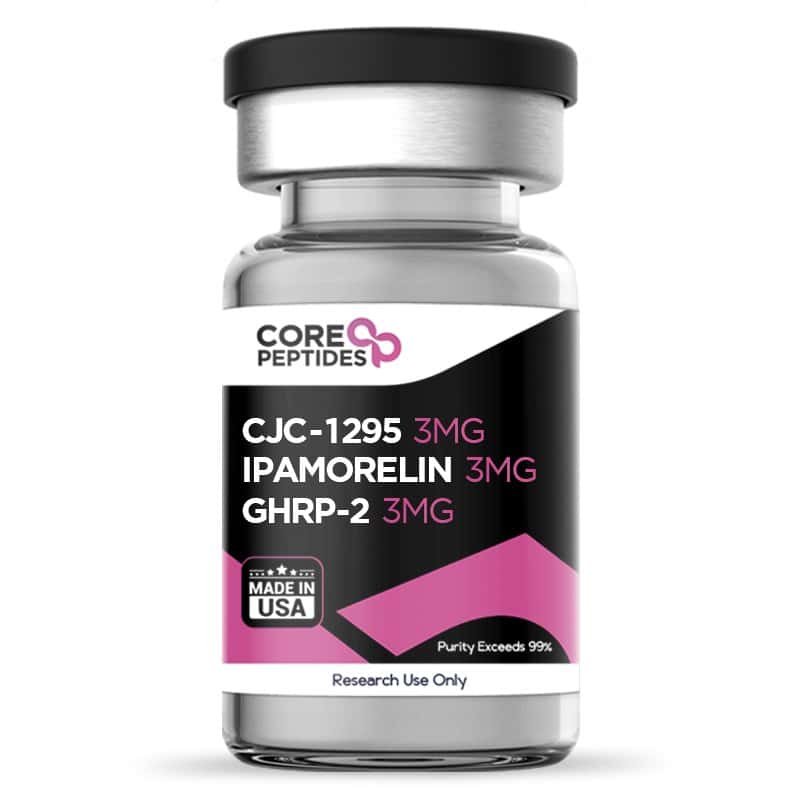
Total Content: 9mg per vial (typically a 1:1:1 ratio of 3mg each [verify with brand])
-
Active Compounds: CJC-1295 (without DAC / Mod GRF 1-29), Ipamorelin, GHRP-2
-
Purity Standard: Greater than or equal to 98% (verified via HPLC/MS)
-
Format: Sterile glass vial for laboratory reconstitution
-
Storage Requirements: Stable at room temperature for shipping; requires -20°C for long-term storage
-
Intended Use: In vitro laboratory research and animal studies only; not for human consumption
What Is the CJC-1295 & Ipamorelin & GHRP-2 Blend?
This product is a synchronized combination of three distinct synthetic peptides designed to study growth hormone (GH) release pathways. Rather than testing these agents individually, researchers use the blend to observe cross-talk between different receptor groups.
       [ Research Compound Architecture ]
                       │
       ┌───────────────┼───────────────┐
       ▼               ▼               ▼
   CJC-1295       Ipamorelin        GHRP-2
 (GHRH Agonist)  (Highly Selective) (Potent GHS)
       │               │               │
       └───────────────┬───────────────┘
                       ▼
          [ Target: Pituitary/GHS-R ]
To understand the blend, it helps to look at its individual components:
-
CJC-1295 (Mod GRF 1-29): This is a synthetic analogue of Growth Hormone-Releasing Hormone (GHRH). It binds to GHRH receptors in the pituitary gland to stimulate cellular production of GH. Note: This blend uses the version without DAC (Drug Affinity Complex), meaning it has a shorter half-life that mimics natural, episodic GH pulses.
-
Ipamorelin: A pentapeptide that acts as a selective agonist of the ghrelin/growth hormone secretagogue receptor (GHS-R). It is highly favored in research because it stimulates GH release without significantly impacting ACTH (cortisol) or prolactin levels.
-
GHRP-2 (Growth Hormone Releasing Peptide-2): Another potent GHS-R agonist. While it acts on the same receptor architecture as Ipamorelin, it has a slightly different binding affinity profile and a well-documented history in early endocrine research.
Mod GRF 1-29 vs. CJC-1295 with DAC
A common point of confusion is the difference between these variants. Standard CJC-1295 without DAC is chemically identical to Mod GRF 1-29. It provides a brief window of receptor activation. Versions with DAC attach to albumin in the body, extending the lifespan of the peptide for days. For physiological pulsing simulations, the non-DAC variant in this blend is typically preferred.
Key Benefits and Use Cases in Research
The primary reason investigators utilize a cjc-1295 & ghrp-2 blend augmented with Ipamorelin is to study the phenomenon of synergistic receptor activation.
When a GHRH pathway agonist (CJC-1295) and a GHS-R pathway agonist (Ipamorelin/GHRP-2) are introduced together, the total cellular response can be significantly higher than the sum of their individual effects.
Main Research Applications
-
Cellular Signaling Kinetics: Mapping how simultaneous activation of GHRH and GHS receptors prevents premature receptor desensitization.
-
Pulsatile Release Profiling: Observing the amplitude and duration of growth hormone spikes in animal models when multiple triggers are deployed.
-
Comparative Selectivity Studies: Investigating whether the presence of GHRP-2 alters the ultra-selective properties of Ipamorelin when presented in a combined matrix.
Quality, Purity, and Testing Standards
In the gray-market chemical landscape, transparency is everything. Substandard manufacturing can introduce truncated peptide sequences, heavy metals, or residual trifluoroacetic acid (TFA) salts, all of which ruin research data.
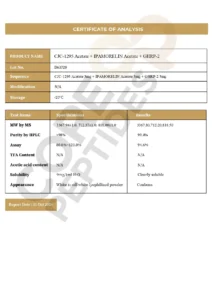
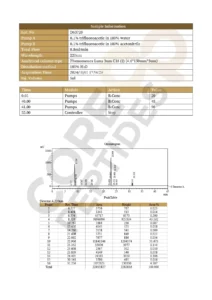
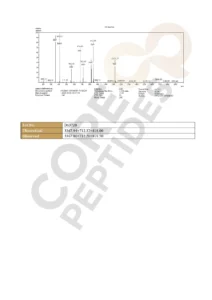
Purity vs. Identity: High-quality research requires two distinct verification testing types. HPLC (High-Performance Liquid Chromatography) measures the exact purity percentage, while MS (Mass Spectrometry) confirms that the molecular weight matches the target peptide structure exactly.
What to Look For on a Certificate of Analysis (COA)
-
Purity Rating: Do not accept compounds with less than 98% purity.
-
Chromatogram Visuals: A single, sharp peak indicates a clean sample. Multiple small peaks point to impurities or degraded fragments.
-
Independent Verification: Ensure the testing lab is an unbiased, third-party entity located in a transparent jurisdiction.
How to Evaluate This Product Before Buying
When searching for a reliable cjc-1295 & ipamorelin & ghrp-2 blend for sale, use this checklist before executing your purchase order:
-
[ ] Batch-Specific Testing: Verify that the COA listed on the site matches the actual batch number printed on your vial label.
-
[ ] Visual Appearance: The lyophilized cake inside the vial should be a solid, crisp white plug. Avoid vials containing loose, yellowed, or completely melted powder, as this indicates moisture intrusion or heat damage.
-
[ ] Clear Labeling: The vial must explicitly state “For Research Use Only” or “Laboratory Reagent” to comply with global transport regulations.
-
[ ] Sourcing Origin: Ensure the vendor controls their supply chain and performs secondary internal testing upon receiving raw materials from synthesis facilities.
Storage, Handling, and Usage Considerations
Proper preservation preserves peptide bonds and prevents premature degradation.
Storage Protocols
-
Pre-Reconstitution (Dry Powder): Store at -20°C for long-term stability up to 24 months. If kept in a standard refrigerator (2–8°C), use within 3–6 months. Protect from direct UV light exposure.
-
Post-Reconstitution (Liquid Solution): Once a laboratory solvent like Bacteriostatic Water is introduced, the solution must be stored between 2–8°C. Do not freeze liquid peptides, as the ice crystallization process can snap fragile peptide chains.
Handling Precautions
Peptides are physically fragile. When introducing solvents, never drop the liquid directly onto the lyophilized powder. Instead, aim the needle at the glass wall of the vial and let the liquid slide down slowly. Swirl gently to dissolve; never shake the vial vigorously.
Expert Insight / Pro Tip
When designing protocols around multi-peptide blends like the cjc-1295 & ipamorelin & ghrp-2 matrix, calculate your concentration metrics based on the individual component weights, not the total 9mg mass. Because this is a pre-blended mixture, your solvent volume calculations must factor in the volume displacement of a larger total powder volume to ensure exact delivery metrics during micro-pipetting procedures.
Why Choose CorePeptidesOfficial.com?
Core Peptides provides a reliable ecosystem for clinical and academic laboratory buyers.
-
Verifiable Transparency: Every product batch undergoes stringent third-party analysis, with public access to high-resolution HPLC and MS data sheets.
-
Cold-Chain Integrity: Products are synthesized, packed, and stored under strict temperature controls to eliminate thermal degradation prior to shipping.
-
Precise Formulation: The 9mg blend is mixed with exact structural ratios, ensuring that every aliquot taken from the reconstituted vial retains an identical ratio of ingredients.
Common Mistakes to Avoid
-
Confusing Mod GRF with CJC-1295 DAC: Using a DAC version by mistake will completely alter the baseline timing of your research models due to its prolonged circulatory persistence.
-
Using Non-Sterile Solvents: Standard purified or distilled water lacks preserving agents. Always use certified laboratory-grade bacteriostatic water or sterile saline to prevent bacterial proliferation inside the vial matrix.
-
Overlooking the Total Mass: Assuming a 9mg vial has the same reconstitution ratio as a single-peptide 2mg or 5mg vial can lead to significant mathematical calculation errors in your dosing logs.
Final Buying Guidance
The CJC-1295 & Ipamorelin & GHRP-2 Blend (9mg) is an ideal asset for advanced research laboratories looking into multi-pathway endocrine responses. To secure accurate data, always verify the current batch COA, check the integrity of the vial seals upon arrival, and maintain strict temperature logging.
If your laboratory is ready to acquire this compound for upcoming study protocols, ensure you review the analytical data sheet on CorePeptidesOfficial.com to match batch purity levels with your internal project benchmarks.
Frequently Asked Questions
- What is the exact ratio of the three peptides in this 9mg blend? The 9mg formulation is typically divided equally into a 1:1:1 ratio, providing 3mg of CJC-1295, 3mg of Ipamorelin, and 3mg of GHRP-2 per vial. However, you should always [verify with brand] during checkout to check current batch manufacturing specifications.
- Can I use this product for personal physical therapy or fitness? No. This product is manufactured and sold strictly for laboratory research, in vitro cellular modeling, and animal testing. It is not approved for human or veterinary use, and consumption can be dangerous.
- How long does the blend remain stable after adding water? Once reconstituted with bacteriostatic water and stored properly in a refrigerator between 2–8°C, the chemical structure remains highly stable for approximately 21 to 28 days. Beyond this window, gradual peptide degradation may cause a drop in potency.
- What is the difference between Ipamorelin and GHRP-2 in this blend? While both target the GHS-R receptor to trigger growth hormone release, Ipamorelin is ultra-selective and does not alter cortisol or prolactin levels. GHRP-2 is slightly less selective but exhibits high potency, providing a multi-tiered approach to receptor interaction when blended.
- What should I do if my vial arrives with crumbly or loose powder? A crumbled lyophilized cake is common during international transit vibrations and does not harm the structural integrity of the molecules. However, if the powder appears wet, completely liquefied, or yellowed, pause your study and contact the vendor support team immediately for a quality review.
Certificate of Analysis
HPLC
Mass Spectrometry
Be the first to review “CJC-1295 ( Mod GRF 1-29 ) & Ipamorelin & GHRP-2 Blend ( 9mg )”
Related products
Peptides Blends
Tesamorelin & CJC-1295 (Mod GRF 1-29) & Ipamorelin Blend (12mg)
Peptides Blends
Peptides Blends
Peptides Blends
Peptides Blends
Peptides Blends
Peptides Blends
Reviews
There are no reviews yet.