
CJC 1295 and Ipamorelin 10mg Blend: The Ultimate Research Buying Guide
If you are researching the CJC 1295 peptide, you have likely noticed it is frequently paired with Ipamorelin. Navigating the online landscape for research chemicals can be challenging. Purity levels vary wildly between vendors. Misleading labeling is common.
This comprehensive guide breaks down the science, data, and quality markers of the CJC 1295 + Ipamorelin 10mg blend from CorePeptidesOfficial.com. Our goal is to provide lab buyers and researchers with the exact transparent data needed to make a safe, verified purchase.
Quick Facts & cjc 1295 Highlights
-
Product Type: Lyophilized (freeze-dried) peptide blend.
-
Total Content: 10mg per vial (typically a 1:1 ratio of 5mg CJC 1295 No DAC and 5mg Ipamorelin [verify with brand/source]).
-
Purity Standard: ≥99% purity verified by independent third-party HPLC and mass spectrometry testing.
-
Format: Sterile, vacuum-sealed glass vial containing white cake/powder.
-
Intended Use: In vitro laboratory research and comparative biochemical analysis only. Not for human or veterinary use.
-
Storage Requirements: Stable at room temperature during transit. Requires long-term storage at -20°C or 2°C to 8°C after arrival.
-
Ideal Fit: Analytical laboratories, academic institutions, and independent biochemical researchers seeking high-reproducibility reference materials.
What is the CJC 1295 + Ipamorelin Blend?
The cjc-1295 ipamorelin blend is a dual-action formulation designed for comparative endocrinology research. It combines two distinct growth hormone secretagogues (GHS) that target different pathways to stimulate growth hormone release.
CJC 1295 (Mod GRF 1-29)
The term cjc 1295 can refer to two different chemical structures. It is crucial to understand the difference before buying:
-
CJC 1295 No DAC (Modified GRF 1-29): This is a modified version of the natural Growth Hormone Releasing Hormone (GHRH). It consists of 29 amino acids. It has a shorter half-life in laboratory models, lasting approximately 30 minutes. This mimics natural, pulsatile hormone releases.
-
CJC 1295 With DAC (Drug Affinity Complex): This version includes an added chemical complex that binds to albumin. It extends the compound’s active lifespan in test environments to several days.
The blend featured at CorePeptidesOfficial.com utilizes cjc 1295 no dac. This allows researchers to simulate acute, natural physiological pulses rather than continuous elevation.
2. Ipamorelin
Ipamorelin is a synthetic pentapeptide (5 amino acids). It acts as a selective ghrelin receptor agonist. Unlike older compounds in its class, Ipamorelin does not significantly impact cortisol, prolactin, or aldosterone levels in animal models. This selective nature makes it a highly sought-after compound for clean data collection.
By blending cjc1295 with Ipamorelin, researchers can observe the synergistic effects of simultaneous GHRH receptor binding and ghrelin receptor activation.
cjc 1295 ipamorelin Key Research Use Cases and Benefits
In cellular and animal models, researchers study cjc 1295 and ipamorelin to observe their impact on several physiological biomarkers.
Cellular Repair and Tissue Regeneration
Studies indicate that combining a GHRH agonist with a ghrelin receptor agonist accelerates cellular turn-over. Researchers measure parameters like collagen synthesis, wound healing rates, and fibroblast migration when exposed to the blend.
Protein Synthesis and Muscle Growth
The primary driver behind searches for cjc 1295 for muscle growth or cjc 1295 ipamorelin bodybuilding dosage is the compound’s impact on nitrogen retention. In laboratory research settings, investigators track the rate of amino acid uptake in skeletal muscle tissues to document potential increases in lean mass development.
Adipose Tissue Metabolism
Growth hormone elevations alter lipid pathways. Researchers use the cjc-1295 ipamorelin blend to observe lipolysis (the breakdown of stored fats) in isolated fat cells. This helps determine how secretagogues alter baseline metabolic rates.
Quality, Purity, and Testing Standards
The research chemical market suffers from an ongoing issue: under-dosed vials and residual manufacturing solvents. When evaluating a 10mg cjc 1295 ipamorelin vial, the visual presence of white powder is not proof of quality.
CorePeptidesOfficial.com enforces strict quality verification standards to eliminate variable results in the lab:
-
High-Performance Liquid Chromatography (HPLC): This analytical chemistry method separates, identifies, and quantifies each component in a mixture. HPLC testing confirms that our blend meets or exceeds a ≥99% purity threshold. It ensures no structural degradations or heavy impurities remain in the vial.
-
Mass Spectrometry (MS): While HPLC verifies purity, MS verifies identity. It measures the precise molecular weight of the peptide chain. This guarantees that the substance inside the vial is exactly cjc-1295 and Ipamorelin, rather than an unverified substitute.
-
Lyophilization Standards: Our peptides are freeze-dried under strict vacuum parameters. This removes all ambient moisture, maximizing the compound’s structural integrity and shelf life.
How to Evaluate This CJC-1295 Before Buying from corepeptidesofficial.com
To ensure data integrity and avoid compromised research materials, always check the following criteria before executing a transaction:
-
Demand a Batch-Specific Certificate of Analysis (COA): Never rely on outdated or generic website graphics. A valid COA must display a recent analysis date, a visible purity graph with clear peaks, and match the specific batch number on your product label.
-
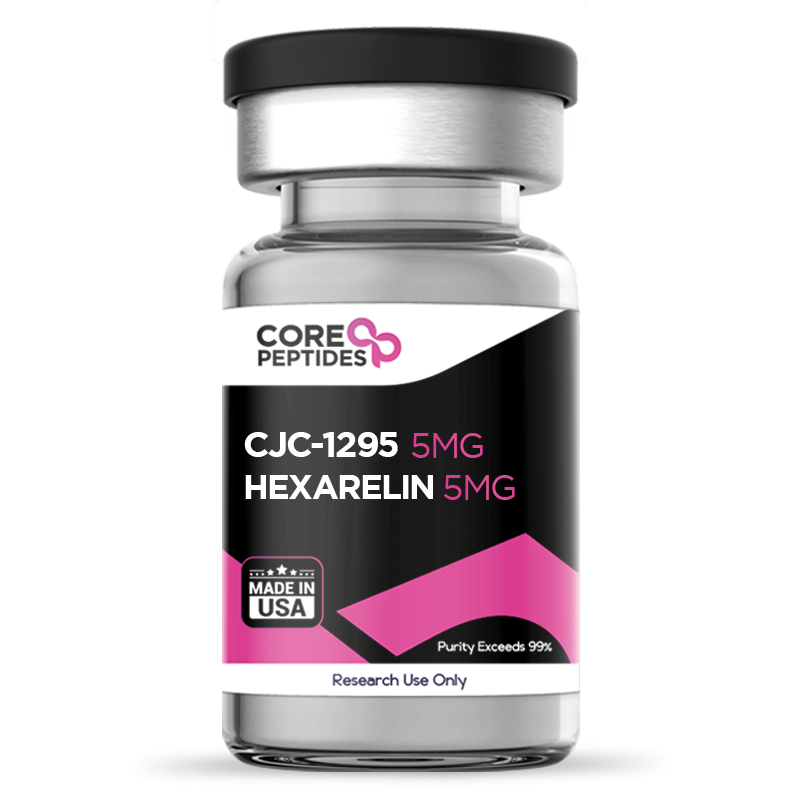
Inspect Product Labeling: Legitimate vendors adhere strictly to global regulatory compliance structures. Ensure labels clearly state “For Research Use Only” and list the exact milligram content (10mg cjc 1295 ipamorelin).
-
Evaluate Pricing Reality: Manufacturing high-purity peptides to a ≥99% standard requires sophisticated equipment and expensive raw reagents. Avoid vendors offering steep discounts that fall well below industry market averages. These are frequently markers of contaminated or highly under-dosed products.
cjc 1295 and ipamorelin dosing, Storage, Handling, and Reconstitution Considerations
Proper handling is imperative because peptides are highly fragile sequence chains. Rough treatment can break down their molecular bonds.
Unopened Vials
Keep raw, lyophilized vials away from direct light and moisture. Store them at 2°C to 8°C (36°F to 46°F) for short-term preservation. For long-term storage exceeding several months, keep them frozen at -20°C (-4°F) to maintain structural lock.
Reconstitution Protocol
To prepare the white cake for analytical testing, researchers introduce a sterile liquid medium:
-
Liquid Choice: Cjc 1295 ipamorelin bacteriostatic water mix preparations are standard. Bacteriostatic water contains 0.9% benzyl alcohol, which inhibits bacterial growth inside the vial.
-
The Gentle Pour: Never spray liquid directly onto the lyophilized powder. Direct force can shear the delicate peptide bonds. Instead, angle the syringe needle toward the glass wall of the vial. Allow the bacteriostatic water to slide gently down the side.
-
Do Not Shake: Swirl the vial with a gentle, circular wrist motion until the solution clarifies into a fully transparent liquid. Shaking will denature the proteins and ruin the sample.
Post-Reconstitution Shelf Life
Once liquefied, the peptide’s stability drops significantly. Store reconstituted vials strictly between 2°C to 8°C. The active cjc 1295 ipamorelin shelf life after reconstitution is typically 21 to 28 days [verify with brand/source]. Beyond this window, progressive peptide degradation occurs, compromising research accuracy.
Expert Insight / Pro Tip
Analytical Pro-Tip: When planning multi-phase laboratory models, always purchase your entire sample set from the exact same manufacturing batch. Minor batch-to-batch variations in residual trifluoroacetic acid (TFA) salts—even within a compliant ≥99% purity range—can subtly alter baseline cellular cell cultures or animal weight readings. Utilizing a unified batch number protects your data consistency across long-term evaluation phases.
Why Choose CorePeptidesOfficial.com?
CorePeptidesOfficial.com stands as a premier supplier for global research institutions by eliminating guesswork from procurement:
-
Total Transparency: Every shipment gives researchers clear paths to corresponding batch-testing data, ensuring complete transparency before your team unboxes a sample.
-
Secure Vacuum Sealing: Our glass vials are fitted with medical-grade rubber bungs and flip-top aluminum caps. This preserves the internal vacuum and blocks moisture ingress entirely.
-
Global Logistics Control: We route all domestic and international shipments utilizing cold-chain optimized transport practices. This ensures environmental extremes encountered during transit do not degrade the raw peptide structures.
Common Mistakes to Avoid when buying cjc 1295 from corepeptidesofficial.com
-
ata-path-to-node=”55,0,0″ data-index-in-node=”0″>Confusing CJC1295 Formulations: Mistakenly using cjc 1295 dac dosage calculations for a cjc 1295 no dac protocol will skew experimental results due to the vast differences in their active half-lives.
-
Using Standard Sterile Water: Reconstituting with basic sterile water instead of bacteriostatic water means the solution lacks an antimicrobial agent. This limits your safe laboratory testing window to less than 24 hours before bacterial contamination risks arise.
-
Exposing Reconstituted Solutions to Vibrations: Storing liquid peptides inside a high-traffic refrigerator door exposes the delicate solutions to constant kinetic movement and slamming forces. This can break down the peptide sequences over time. Store vials deep within a stable center shelf.
Final cjc 1295 Buying Guidance
When buying research peptides online, prioritizing quality verification over lower prices saves time and resources. Ensure your lab equipment is calibrated for a 10mg cjc 1295 ipamorelin concentration profile.
Ready to secure verified reference materials for your upcoming study? Navigate to CorePeptidesOfficial.com to review our comprehensive purity metrics, download batch certificates, and complete your secure checkout with absolute confidence.
Frequently Asked Questions
1. What is the difference between Sermorelin vs. CJC1295?
While both compounds act as GHRH analogues, they differ in their structural durability. Sermorelin is a truncated 29-amino-acid chain that mimics natural GHRH but degrades very rapidly in living tissues. CJC 1295 No DAC features specific amino acid substitutions that make it significantly more resistant to enzymatic degradation, giving it a longer and more predictable research testing window.
2. How do I use a cjc-1295 ipamorelin dosage calculator?
To determine concentration levels, divide the total milligram content of the vial by the volume of bacteriostatic water introduced. For example, adding 2mL of water into a 10mg cjc 1295 ipamorelin blend vial creates a final solution concentration of 5mg per mL (or 500mcg per 0.1mL / 10 units on a standard syringe). Always calibrate your instrumentation based on the precise volume added.
3. What are the known cjc-1295 side effects documented in research?
In animal test models, reported side effects primarily relate to acute systemic vasodilation. Documented observations include transient head flushing, localized skin irritation or redness at the injection site, and brief drops in blood pressure immediately following administration.
4. Can this cjc 1295 be shipped internationally?
Yes, CorePeptidesOfficial.com services a global research market. The lyophilized powder form ensures the peptide chain remains completely stable across standard international transport timelines, provided it is stored properly upon arrival at your facility.
5. How long does it take to see results in research models?
In cellular and animal research models, changes in plasma growth hormone levels can be measured via blood assays within 30 to 60 minutes post-exposure. Visible downstream structural shifts, such as changes in adipose tissue markers or nitrogen retention, typically require consecutive observational tracking over a 4 to 12-week timeline.
Be the first to review “CJC-1295 (Mod GRF 1-29) & Hexarelin Blend ( 10mg )”
Related products
Peptides Blends
Peptides Blends
Tesamorelin & CJC-1295 (Mod GRF 1-29) & Ipamorelin Blend (12mg)
Peptides Blends
Peptides Blends
Peptides Blends
Peptides Blends
Peptides Blends
Peptides Blends
Reviews
There are no reviews yet.