
Buy Tesamorelin & CJC-1295 (Mod GRF 1-29) & Ipamorelin Blend
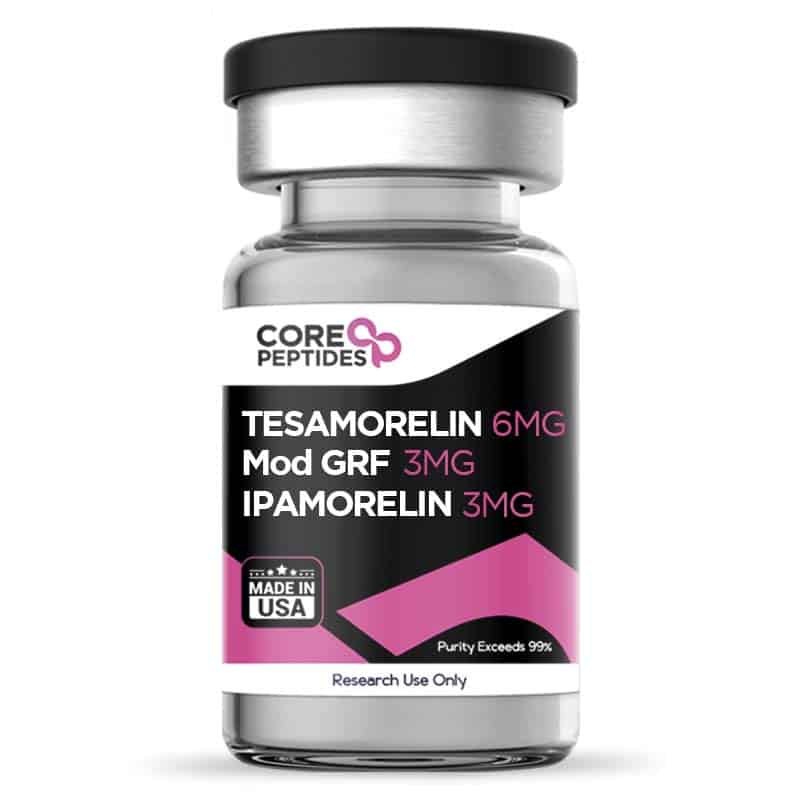
When evaluating laboratory compounds for growth hormone secretagogue (GHS) research, selecting high-purity formulations is critical. If you are looking to buy Tesamorelin & CJC-1295 (Mod GRF 1-29) & Ipamorelin Blend, you are looking at one of the most comprehensive triple-combination blends available for in vitro and in vivo laboratory research. This specialized 12mg formulation blends three distinct peptides designed to cross-amplify cellular signaling pathways.
Understanding the purity standards, molecular synergy, and strict handling requirements of this blend is essential before completing your acquisition.
Product Highlights & Quick Facts
-
Product Type: Triple-Peptide Blend (Combination Growth Hormone Releasing Hormone & Analogues)
-
Total Content: 12mg per vial (specific breakdown ratio [verify with brand/source])
-
Format: Lyophilized (freeze-dried) white powder or cake
-
Purity Standard: Greater than or equal to 99% [verify with brand/source Certificate of Analysis]
-
Primary Intended Use: In vitro laboratory research and comparative animal models
-
Storage Requirements: Stable at room temperature during transit; requires long-term storage at -20°C or 2°C to 8°C after arrival.
-
Best-Fit Buyer: Qualified clinical researchers, biochemical academic institutions, and verified laboratory buyers.
What the Product Is
The Tesamorelin & CJC-1295 (Mod GRF 1-29) & Ipamorelin Blend is a highly engineered compound containing three distinct growth hormone secretagogues. In research environments, these three agents work via separate but complementary mechanisms to stimulate endogenous Growth Hormone (GH) pathways.
Instead of deploying a single pathway, this blend hits multiple receptor types simultaneously to avoid early cellular receptor saturation.
       [ Pituitary Gland / Receptors ]
         /           |             \
        /            |              \
  GHRH Receptor  GHRH Receptor   GHS Receptor
      (GHRH)         (GHRH)         (GHS-R)
        |            |               |
  Tesamorelin    CJC-1295        Ipamorelin
  (Analog)     (Mod GRF 1-29)    (Mimetic)
-
Tesamorelin: A synthetic analogue of Growth Hormone-Releasing Hormone (GHRH) consisting of 44 amino acids with an added hexenoyl group. This structural modification increases its stability and resistance to rapid enzymatic degradation in test models.
-
CJC-1295 (Mod GRF 1-29): A 29-amino acid peptide that represents the functional core of natural GHRH. It has been modified at four specific positions to significantly extend its biological half-life compared to unmodified GHRH.
-
Ipamorelin: A selective, pentapeptide growth hormone secretagogue that acts as a ghrelin receptor agonist (mimetic). It initiates a pulse of growth hormone release without significantly elevating secondary hormones like cortisol, prolactin, or aldosterone.
Key Benefits and Use Cases in Research
In biochemical and metabolic research models, combining these three molecules offers distinct advantages over isolated single-peptide studies:
-
Amplified Signaling Synergy: GHRH analogues (Tesamorelin and CJC-1295) and Ghrelin mimetics (Ipamorelin) work synergistically. When studied together, they trigger a larger cellular response than the sum of their individual effects.
-
Extended Half-Life Mapping: Because Mod GRF 1-29 and Tesamorelin possess different structural modifications, researchers use this blend to evaluate kinetic stability and prolonged signaling pathways over extended observation windows.
-
Highly Selective Cellular Responses: The inclusion of Ipamorelin allows researchers to monitor growth hormone secretagogue receptor (GHS-R) mechanics while keeping stress-hormone biomarkers controlled and predictable.
Quality, Purity, and Testing Standards
In the research chemical industry, chemical identity and batch-to-batch consistency are paramount. Subtle impurities or errors in peptide synthesis can completely invalidate your laboratory data.
To ensure safety and data integrity, every vial of Tesamorelin & CJC-1295 (Mod GRF 1-29) & Ipamorelin Blend (12mg) must meet rigorous testing criteria before it is cleared for laboratory use.
| Testing Parameter | Methodology | Target Specification |
| Chemical Purity | High-Performance Liquid Chromatography (HPLC) | $\ge 99\%$ purity profiles |
| Mass Verification | Mass Spectrometry (MS) | Confirms exact molecular weight of all three components |
| Physical Appearance | Visual Inspection | Uniform white lyophilized cake; free of visible contaminants |
| Vial Sealing | Vacuum/Nitrogen Flush | Displaces oxygen to eliminate oxidation risks during storage |
How to Evaluate This Product Before Buying
With various suppliers active in the gray-market wellness and biotech spaces, checking quality before purchasing prevents expensive laboratory setbacks. Follow these verification steps prior to finalizing your order:
Request the Certificate of Analysis (COA)
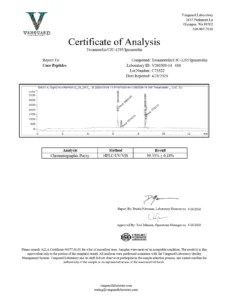
Never buy from a vendor that hides their testing data. A valid COA should match the current batch number on your vial and explicitly state both the HPLC purity percentage and MS confirmation.
Verify Batch Numbers
Legitimate suppliers utilize a clear batch-tracking system. Ensure the batch number printed on the product label can be traced directly back to an independent, third-party laboratory verification portal.
Review Product Labeling and Terms
Reputable providers use precise, legally compliant labeling. Look for clear “Research Use Only” markings and transparent mass declarations (12mg total content). Avoid brands that use hyper-aggressive marketing or promise guaranteed physical outcomes.
Storage, Handling, and Usage Considerations
Proper preservation preserves the peptide bonds and prevents degradation of the multi-part blend.
-
Prior to Reconstitution: Keep the lyophilized vial inside a dark, moisture-free environment. For short-term storage (under 3 months), maintain a temperature of 2°C to 8°C. For long-term preservation, store at -20°C.
-
Handling Vibrations: Lyophilized peptides are highly fragile structures. Avoid dropping, shaking, or vigorously agitating the vial, as mechanical stress can fracture the delicate peptide chains.
-
Reconstitution Fluid: When preparing the sample for assay analysis, gently introduce bacteriostatic water or sterile normal saline down the inner glass wall of the vial. Allow the liquid to dissolve the cake naturally without shaking [verify exact fluid volumes with your specific laboratory protocol].
💡 Expert Insight / Pro Tip
When working with complex multi-peptide blends like this 12mg formulation, temperature stability during reconstitution is vital. Always allow the frozen or chilled vial to come to room temperature naturally before injecting your reconstitution liquid. Introducing cold liquids into a warm vial, or vice-versa, can create thermal shock that compromises the delicate peptide structures.
Why Choose CorePeptidesOfficial.com?
CorePeptidesOfficial.com is dedicated to supplying the scientific and clinical research community with pure, verifiable, and highly stable compounds.
-
Uncompromised Testing Protocols: Every batch undergoes comprehensive third-party testing to ensure you receive the exact chemical identity and mass specified.
-
Secure Vacuum Packaging: Our vials are sealed under an inert gas environment to prevent moisture contamination and atmospheric degradation during international transit.
-
Transparent Sourcing: We offer clear documentation, traceable batch codes, and accessible support for verification queries.
Common Mistakes to Avoid
-
Storing in Standard Freezers with Auto-Defrost: Auto-defrost freezers experience periodic temperature spikes to clear frost buildup. These temperature fluctuations can rapidly degrade the delicate molecular bonds of your peptides. Use a dedicated, non-frost-free scientific freezer.
-
Assuming Equal Structural Ratios Blindly: Do not assume a 12mg blend contains a simple 1:1:1 ratio unless verified by the paperwork. Always check the specific batch configuration sheet to align your calculations precisely with your testing protocol.
-
Exposing Vials to Direct UV Light: Ultraviolet light can disrupt chemical bonds. Keep your vials inside dark storage boxes or wrapped protective sleeves during observation windows.
Final Buying Guidance
When preparing to purchase your Tesamorelin & CJC-1295 (Mod GRF 1-29) & Ipamorelin Blend, double-check your current laboratory inventory and confirm your required testing thresholds. Make sure your research space is equipped with proper refrigeration units and precision reconstitution tools.
Ready to secure verifiable, laboratory-grade compounds for your upcoming research projects?
Frequently Asked Questions
- What does the 12mg designation represent in this blend? The 12mg designation specifies the total combined mass of the lyophilized peptides contained within that single vial. To find the exact mass ratio of Tesamorelin, CJC-1295, and Ipamorelin making up that 12mg total, you should check the product specification sheet [verify with brand/source].
- Can I use this product for personal wellness or body transformation protocols? No. This product is manufactured and sold strictly for laboratory research, in vitro diagnostic assessments, and controlled animal models. It is not approved for human consumption, therapeutic use, or medical treatments.
- How long does the blend remain stable after it has been reconstituted? Once mixed with a liquid solution, peptides become significantly more fragile. Generally, reconstituted peptides must be stored between 2°C to 8°C and should be utilized within 14 to 28 days to prevent loss of potency [verify exact stability windows with your testing protocol].
- What is the difference between CJC-1295 with DAC and the Mod GRF 1-29 in this blend? Mod GRF 1-29 is often referred to as “CJC-1295 without DAC.” It acts via brief, natural pulses lasting roughly 30 minutes. CJC-1295 with DAC includes an added Drug Affinity Complex that binds to blood proteins, extending its activity window for days. This blend uses Mod GRF 1-29 to maintain predictable, controllable pulsatile tracking.
- What should I do if my vial arrives with a cracked or broken lyophilized cake? It is completely normal for the dry peptide cake to shift, crack, or break into smaller powder pieces during transit. This visual change does not mean the product is degraded. As long as the vacuum seal remains intact and the vial is undamaged, the chemical purity and mass are completely unaffected.
Certificate of Analysis
Be the first to review “Tesamorelin & CJC-1295 (Mod GRF 1-29) & Ipamorelin Blend (12mg)”
Related products
Peptides Blends
Peptides Blends
Peptides Blends
Peptides Blends
Peptides Blends
Peptides Blends
Peptides Blends
Reviews
There are no reviews yet.