
CJC-1295 (Mod GRF 1-29) & Hexarelin Blend: The Researcher’s Guide
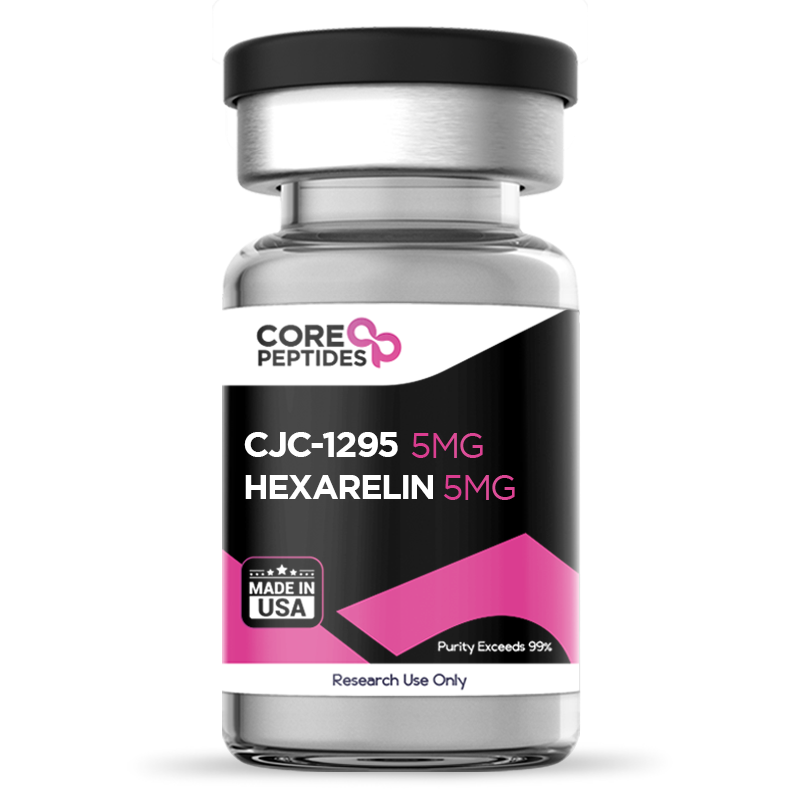
When conducting laboratory research on growth hormone secretagogues (compounds that stimulate hormone release), selecting the right chemical profile is critical. The CJC-1295 (Mod GRF 1-29) & Hexarelin Blend represents a specific combination designed to study synergistic pathways in cellular models.
This guide provides an objective breakdown of this 10mg blend, its molecular characteristics, and how to verify its quality before purchasing.
Quick Facts & Product Highlights
-
Product Type: Lyophilized (freeze-dried) peptide blend.
-
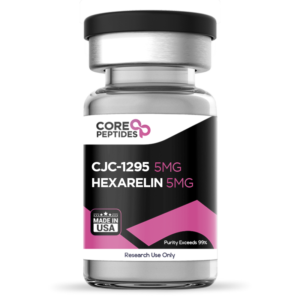
Total Content: 10mg per vial (typically split as a [verify ratio, e.g., 5mg/5mg] blend of CJC-1295 Mod GRF 1-29 and Hexarelin).
-
Primary Intended Use: In vitro laboratory experimentation and scientific research only. Not for human consumption.
-
Target Purity Standard: Greater than or equal to 99% [verify with brand/source].
-
Testing Protocol: Third-party High-Performance Liquid Chromatography (HPLC) and Mass Spectrometry (MS).
-
Storage Requirements: Keep at -20°C for long-term stability; protect from direct light and moisture.
-
Best-Fit Buyer: Independent researchers, university laboratories, and biotech institutional buyers looking for cross-analyzing dual-pathway growth hormone secretagogues.
What the Product Is
The CJC-1295 (Mod GRF 1-29) & Hexarelin Blend is a dual-peptide formulation engineered for comparative research settings. It combines two distinct types of synthetic peptides that act on different receptors to trigger cellular growth hormone signaling.
- CJC-1295 (Mod GRF 1-29) Mod GRF 1-29 is a synthetic analog of Growth Hormone-Releasing Hormone (GHRH). It consists of 29 amino acids. It is a modified version of the original sermorelin peptide, altered to be more stable when exposed to blood plasma enzymes in laboratory models. It acts specifically by binding to the GHRH receptor.
- Hexarelin; Hexarelin is a synthetic hexapeptide (containing 6 amino acids). It belongs to the Growth Hormone Secretagogue Receptor (GHSR) agonist class, often referred to as a ghrelin mimetic. Unlike Mod GRF, Hexarelin bypasses the GHRH receptor entirely and binds directly to the ghrelin receptor to initiate signaling.
By blending these two molecules into a single 10mg vial, researchers can study the combined interaction of simultaneous GHRH receptor and GHSR activation.
Key Research Use Cases
In test models, this specific combination is studied for its dual-action mechanisms. It allows researchers to investigate physiological traits without introducing separate variables across different control groups.
-
Receptor Synergy Studies: Investigating whether activating both the GHRH and ghrelin receptors simultaneously results in a larger signal cascade than activating either receptor alone.
-
Pulsatile Release Profiling: Analyzing the timing, peak intensity, and duration of growth hormone signaling when a stabilizer (Mod GRF) and a rapid-acting agonist (Hexarelin) are introduced together.
-
Cellular Preservation Research: Studying the downstream impact of ghrelin-receptor activation on cardiovascular tissue models, as Hexarelin is frequently highlighted in literature for its unique cardiac-receptor binding properties.
Quality, Purity, and Testing Standards
In the gray-market chemical and biotech space, analytical accuracy is everything. A minor variance in composition can compromise an entire dataset. High-quality peptide production relies on strict chemical verification.
Third-Party Verification Requirements
Every batch of the hexarelin cjc 1295 stack must undergo independent laboratory verification. Buyers should look for a clear, accessible Certificate of Analysis (COA) containing:
-
HPLC (High-Performance Liquid Chromatography): This test separates the molecules in the sample to determine total purity. High-grade research reagents should show a clean peak representing a purity level of 99% or greater.
-
MS (Mass Spectrometry): This measures the exact molecular mass of the compounds. It verifies that the peptide sequence matches the structural formula for both CJC-1295 (Mod GRF 1-29) and Hexarelin, proving the vial contains the actual target substances.
How to Evaluate This Product Before Buying
Before completing a checkout for research chemicals, run through this verification checklist to protect your research integrity:
-
Review the Actual Batch Number: Ensure the vendor lists an active batch number that maps directly to a recent, unedited third-party lab report. Do not rely on static “sample” COAs from previous years.
-
Inspect the Lyophilization Quality: The content inside the vial should appear as a solid white cake or uniform lyophilized powder plug. Avoid vials showing signs of moisture, cracking, or sticky residue, which indicate poor vacuum sealing or degradation during storage.
-
Verify Intended-Use Labels: Reputable providers clearly state the regulatory limitations of the product on the label. Look for explicit “Research Use Only” or “Not for Human Consumption” text. Avoid companies using evasive marketing or hinting at therapeutic dosing for humans.
Storage, Handling, and Usage Considerations
Proper preservation prevents chemical degradation and ensures reproducible experimental outcomes.
Storage Protocols
-
Lyophilized Powder (Unreconstituted): Store at -20°C or colder for long-term storage up to 24 months. For short-term storage (under 3 months), a stable refrigerator temperature of 2°C to 8°C is acceptable.
-
Reconstituted Liquid State: Once mixed with a laboratory solvent like bacteriostatic water, the blend is highly sensitive to temperature and structural shearing. Store exclusively between 2°C and 8°C and use within the recommended research window [verify timeline, e.g., 14–28 days].
Handling Protocols
Critical Handling Warning: Peptides are fragile chains of amino acids. Never shake a reconstituted vial vigorously. Agitation can break the delicate peptide bonds, rendering the compound inactive for testing. Instead, gently swirl the liquid along the glass walls until the powder dissolves completely.
Expert Insight / Pro Tip
When researching a blend like the CJC-1295 (Mod GRF 1-29) & Hexarelin Blend (10mg), be mindful of receptor desensitization. Hexarelin is known in literature as a potent agonist that can cause rapid downregulation (saturation) of the ghrelin receptor over continuous cellular exposure.
If your research aims to analyze long-term, sustained baseline signaling, design your experimental timelines to account for this potential drop-off. Alternatively, structure distinct “rest periods” into your cellular exposure models to allow receptors to clear.
Why Choose CorePeptidesOfficial.com?
CorePeptidesOfficial.com specializes in delivering high-purity reagents tailored for precise scientific inquiry.
-
Transparency First: Every product batch is tied directly to current, independent laboratory verification data so you know exactly what is arriving at your facility.
-
Secure Cold-Chain Integrity: We understand how environmental factors impact fragile peptide structures. Our storage and quick-ship workflows minimize exposure to ambient heat during transit.
-
Strict Compliance Standards: We adhere fully to industry guidelines, supplying clearly labeled compounds strictly intended for authorized in vitro and laboratory research applications.
Common Mistakes to Avoid
-
Confusing CJC-1295 Varieties: Ensure you are explicitly buying Mod GRF 1-29 (without DAC). CJC-1295 with DAC has a significantly longer half-life and behaves differently in experimental models.
-
Reconstituting with Tap or Purified Water: Standard water contains trace minerals and lacks antimicrobial agents. Always use designated laboratory-grade sterile or bacteriostatic water to prevent premature degradation and bacterial contamination.
-
Overlooking Pre-Checkout Checks: Failing to confirm the exact milligram ratio between the two peptides can alter your molar calculations. Always confirm the exact formulation specifications before running your protocols.
Final Buying Guidance
The CJC-1295 (Mod GRF 1-29) & Hexarelin Blend is a highly targeted tool for exploring dual-pathway growth hormone secretagogue activity. Protecting your data starts with purchasing compounds verified at maximum purity.
Ensure your laboratory infrastructure is equipped with appropriate cold storage (-20°C) and valid reconstitution solvents before ordering.
Ready to secure verified reagents for your next phase of research?
Frequently Asked Questions
- What is the difference between CJC-1295 with DAC and without DAC? CJC-1295 without DAC (often called Mod GRF 1-29) has a short half-life of roughly 30 minutes in laboratory environments, mimicking natural pulsatile growth hormone releases. CJC-1295 with DAC contains an added Drug Affinity Complex that extends its half-life to several days, creating a continuous, non-pulsatile signaling elevation. This blend utilizes the short-acting Mod GRF 1-29 variant.
- Why are these two peptides combined into a single blend? Combining them allows researchers to study the simultaneous activation of GHRH receptors (via Mod GRF) and ghrelin receptors (via Hexarelin). Literature suggests this dual-activation approach can produce a synergistic effect on growth hormone paths, making it a highly efficient model for evaluating total secretagogue potential.
- How should I reconstitute this 10mg vial for laboratory testing? Reconstitution typically involves adding an exact volume of sterile bacteriostatic water or sterile normal saline solution directly into the vial. The fluid should be introduced slowly down the glass side walls. Let the liquid sit, then gently roll or swirl the vial until the lyophilized powder dissolves into a clear liquid. Do not shake.
- Can this product be used for clinical trials or human therapies? No. This peptide blend is manufactured and sold strictly as a laboratory reagent for in vitro scientific research. It is not approved by regulatory bodies for human administration, clinical consumption, or the diagnosis and treatment of any human medical conditions.
- How long will the lyophilized blend remain stable during shipping? Lyophilized peptides are highly resilient in their freeze-dried state. They can withstand room temperature variations during standard domestic or international shipping windows without losing structural integrity. However, once the product arrives at your facility, it should be immediately transferred to a regulated cold storage environment (-20°C) for preservation.
Be the first to review “CJC-1295 (Mod GRF 1-29) & Hexarelin Blend (10mg)”
Related products
Peptides Blends
Peptides Blends
Peptides Blends
Tesamorelin & CJC-1295 (Mod GRF 1-29) & Ipamorelin Blend (12mg)
Peptides Blends
Peptides Blends
Peptides Blends
Peptides Blends
Reviews
There are no reviews yet.