
KPV Peptide: A Buyer’s Guide to the 4mg Research Peptide
If you are looking to purchase KPV peptide for your laboratory or research setup, ensuring you get a stable, high-purity compound is your top priority. KPV is gaining significant traction in biochemical research for its unique structural properties. However, navigating the grey-market research chemical space requires a sharp eye for quality.
This guide breaks down what KPV is, its documented research profile, and how to verify your batch before checking out.
Quick Facts & Product Highlights
-
Product Type: Short-chain tripeptide (derived from Alpha-MSH).
-
Format: Lyophilized (freeze-dried) powder.
-
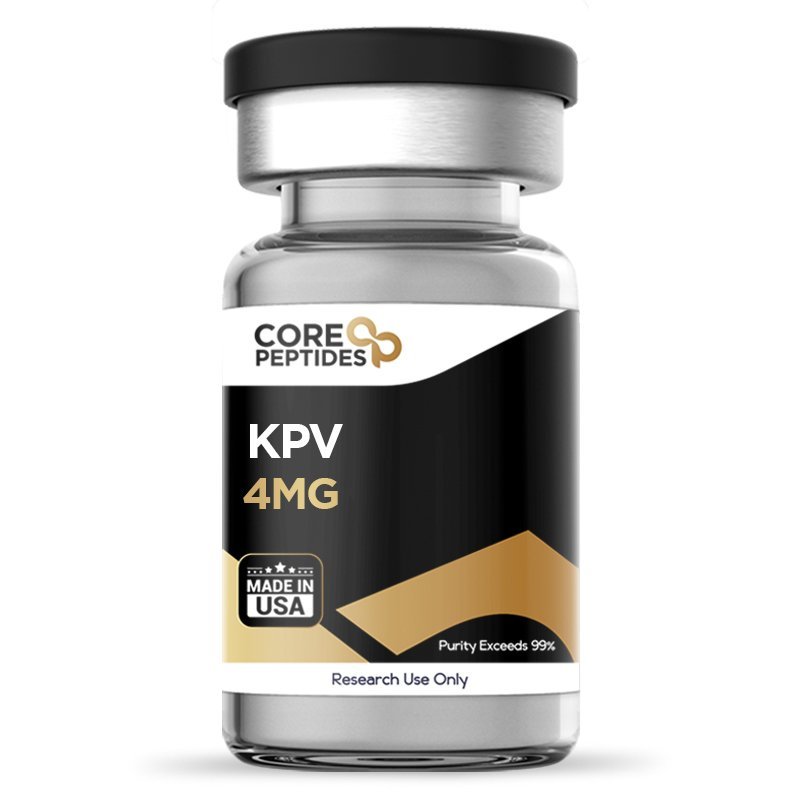
Standard Mass: 4mg per vial (10mg options also exist [verify with brand]).
-
Target Purity: Greater than or equal to 99% (verified by HPLC/MS).
-
Intended Use: In vitro and in vivo laboratory research use only. Not for human consumption.
-
Best-Fit Buyer: Laboratory researchers, biotech institutional buyers, and independent scientists looking for stringently tested, stable anti-inflammatory models.
-
Storage Requirement: Stable at room temperature during shipping; long-term storage requires refrigeration (-20°C preferred).
What is KPV Peptide?
KPV peptide (Lysine-Proline-Valine) is a naturally occurring tripeptide. It represents the C-terminal amino acid sequence of the larger hormone alpha-Melanocyte-Stimulating Hormone ($\alpha$-MSH).
Unlike the full-length hormone, KPV does not bind to the classic melanocortin 1 receptors (MC1R) that stimulate skin pigmentation. This means it does not cause skin tanning. Instead, its structure interacts directly with internal cellular pathways, making it a highly targeted subject for studying localized and systemic inflammatory responses.
Key Research Benefits and Use Cases
In biochemical and animal models, scientists study K.P.V. primarily for its interaction with the immune system and inflammatory pathways. Researchers frequently study what the KPV peptide does across a few distinct areas:
-
Inflammation Regulation: Research suggests KPV works inside cells to turn down the nuclear factor kappa B (NF-$\kappa$B) pathway. NF-$\kappa$B is a primary “on-switch” for inflammatory cytokines.
-
Gut Health Models: Because KPV is a remarkably stable molecule, it is heavily featured in research regarding inflammatory bowel diseases (IBD) and mucosal lining recovery.
-
Antimicrobial Mechanisms: Some studies investigate KPV’s ability to disrupt the cellular walls of specific pathogens, including Candida albicans, making it a cross-disciplinary molecule of interest.
Quality, Purity, and Testing Standards
When buying research chemicals online, visual appearance alone cannot prove a compound’s identity. High-quality peptide KPV must undergo a rigorous dual-testing protocol to verify its contents before it enters your lab.
| Testing Method | What It Verifies | Why It Matters |
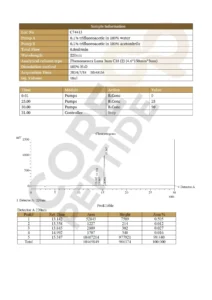
| HPLC (High-Performance Liquid Chromatography) | Purity Percentage | Ensures the vial contains the target peptide mass without leftover synthesis chemicals or degradation products. |
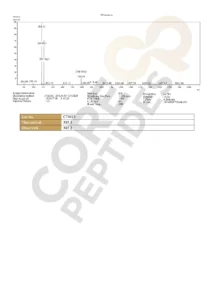
| Mass Spectrometry (MS) | Molecular Identity | Confirms the exact molecular weight matches the chemical structure of Lysine-Proline-Valine. |
Warning: Never purchase from a vendor that does not provide accessible, batch-specific testing data. Unverified peptides often contain structural isomers or residual heavy metals from synthesis.
How to Evaluate This Product Before Buying
Before clicking the checkout button on any KPV peptide for sale, complete this five-point verification check to safeguard your research data.
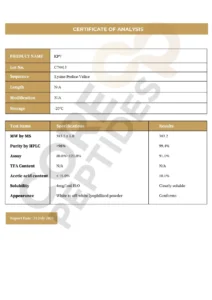
- Check the Certificate of Analysis (COA) A real COA must match the exact batch number printed on your vial. Look for a recent testing date and a clear signature from an independent, third-party laboratory.
- Look for the Intended-Use Language; Legitimate providers clearly label their products as “Research Use Only.” Vendors using evasive or overly promotional language targeted at human consumption often cut corners on structural purity and analytical verification.
- Evaluate the Physical Form; High-quality KPV arrives as a solid, white “cake” or loose powder inside a sealed glass vial. A melted, discolored, or completely liquid presentation indicates poor lyophilization or thermal exposure during transit.
Storage, Handling, and Preparation Considerations
Proper handling is essential to prevent your KPV peptide injection or laboratory solution from degrading before your testing is complete.
-
Before Reconstitution: Keep the lyophilized powder in a freezer at -20°C for optimal shelf life. It can survive standard shipping timelines at room temperature, but should be chilled upon arrival.
-
Reconstitution Solvent: Researchers typically use bacteriostatic water or sterile saline, depending on the specific fluid dynamics of their application.
-
Post-Reconstitution: Once liquid is added, the peptide becomes significantly more fragile. Store the liquid solution between 2°C and 8°C. Use it within 30 days [verify with brand]. Avoid violent shaking; instead, gently swirl the vial to mix.
Expert Insight / Pro Tip
The Stability Advantage: Because KPV is only three amino acids long, it is far less prone to structural folding issues than larger peptides like BPC-157 or LL-37. This compact size makes it highly resilient against rapid enzymatic breakdown in test environments, giving researchers a wider, more forgiving window for experimental observation.
Why Choose CorePeptidesOfficial.com?
CorePeptidesOfficial.com anchors its operations on transparency and chemical precision. We source our raw materials from trusted manufacturers and subject every single batch to independent third-party analysis. When you purchase our 4mg KPV vial, you receive an uncompromised product backed by verifiable data, responsive customer care, and reliable, temperature-stable shipping protocols.
Common Mistakes to Avoid
-
Confusing KPV with Melatnonan: Because KPV originates from $\alpha$-MSH, buyers sometimes mistake it for a tanning agent. Remember, KPV lacks the specific amino acid sequence required to trigger melanin production.
-
Buying Based on Price Alone: Cheap KPV 10mg or 4mg vials often bypass the expensive third-party testing process. A low price tag can cost you weeks of ruined lab data if the actual purity drops below 95%.
-
Improper Storage Practices: Leaving reconstituted KPV on a warm lab bench will rapidly break down the peptide bonds, rendering your solution useless.
Final Buying Guidance
If your research requires a dependable model for inflammation or mucosal barrier stability, the 4mg KPV vial offers an ideal balance of volume and value. Ensure your laboratory tools, solvents, and cold storage are prepared before your shipment arrives.
Ready to secure verified, high-purity materials for your upcoming projects?
Frequently Asked Questions
- What is the difference between KPV 4mg and KPV 10mg? The only difference is the total mass of the peptide cake contained within the vial. The molecular structure and chemical purity remain identical. Researchers select the mass based on the volume requirements of their specific trial designs.
- Can KPV peptide be purchased as capsules or supplements? While some consumer markets sell a KPV supplement or oral KPV peptide capsules, these are intended for separate wellness spaces. High-tier laboratory research typically requires the pure, lyophilized powder form to ensure exact dosing and fluid control.
- Why is my peptide cake broken into powder? It is completely normal for the lyophilized cake to break apart into loose powder during transit. This structural shifting does not affect the chemical stability, purity, or performance of the KPV molecule.
- What should I look for on a KPV Certificate of Analysis? Ensure the identity section states “KPV” or “Lysine-Proline-Valine” with a matching molecular weight. The purity column must display a value of 98% or higher, and the document must show a unique batch number that matches your product label.
- Is KPV stable at room temperature? In its freeze-dried (lyophilized) powder state, KPV can withstand room temperature fluctuations during standard shipping durations. However, exposure to direct heat or prolonged storage outside of a refrigerator will accelerate degradation.
Certificate of Analysis
HPLC
Mass Spectrometry
Be the first to review “KPV (4mg)”
Related products
Peptides
Reviews
There are no reviews yet.