
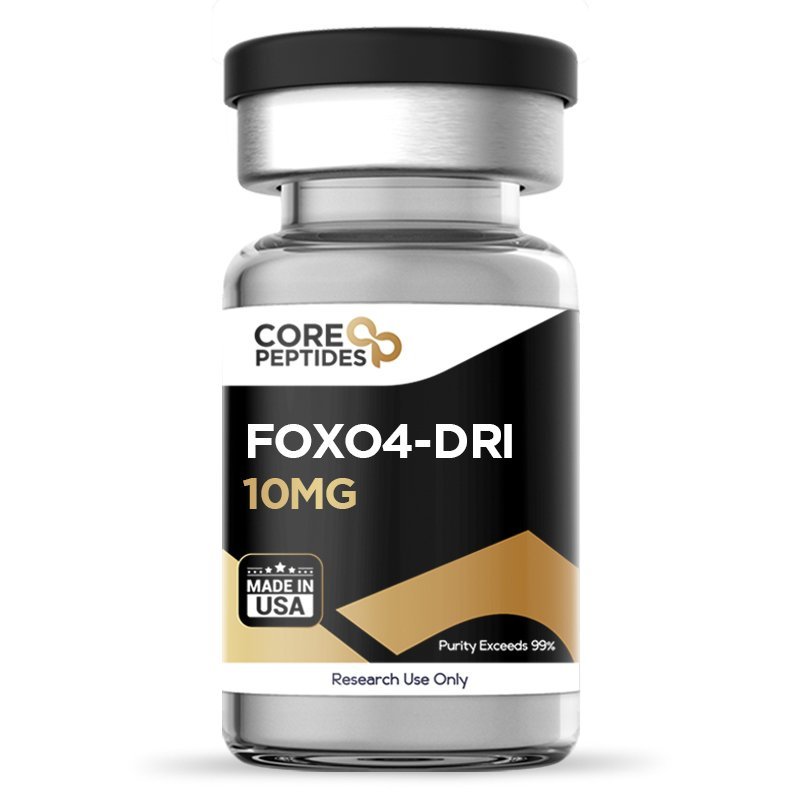
FOXO4-DRI 10mg: The Comprehensive Laboratory Reference Guide
When sourcing foxo4-dri for advanced cellular replication or tissue longevity assays, identifying unadulterated reference materials is absolutely vital. Substandard manufacturing, structural sequence mirrors, or hidden stabilizers can stall targeted senolytic mechanisms, compromising your entire data set. This comprehensive reference text profiles the biochemical traits, purification baselines, and quality markers of the premium foxo4-dri 10mg lyophilized vial at CorePeptidesOfficial.com. Our goal is to equip principal investigators, laboratory procurement teams, and independent biotech buyers with the data needed to make safe, informed choices before checkout.
Quick Facts & foxo4-dri Highlights
-
Product Type: Synthetic D-retro-inverso (DRI) structural peptide modifier (foxo4-dri peptide).
-
Primary Compound: Forkhead box O4 retro-inverso antagonist, structurally cataloged as foxo4-dri.
-
Total Content: 10mg of moisture-depleted, lyophilized white powder cake per vial.
-
Purity Baseline: $\ge 99\%$ purity levels guaranteed via batch-specific third-party HPLC verification.
-
Physical Format: Vacuum-sealed borosilicate glass vial with a chemical-resistant rubber stopper.
-
Intended Use: Exclusively engineered for in vitro laboratory replication, cell assays, and senolytic tissue culture research. Not for human or veterinary use.
-
Storage Protocols: Stable at ambient room temperatures during short transit windows. Long-term laboratory archiving requires placement at -20°C.
-
Ideal Fit: Academic research facilities, independent biotech labs, and clinical trial developers searching for genuine foxo4-dri reference lots.
What the foxo4 dri Is
To establish reliable biological controls, researchers must first understand the structural composition of foxo4-dri and how its amino acid sequence differs from standard cellular compounds.
What exactly is the foxo4-dri peptide at a molecular level? The compound is an engineered antagonist designed to disrupt the natural interaction between the intracellular protein foxo4 and the p53 tumor suppressor protein. In standard cellular models, when a cell becomes senescent—meaning it stops dividing but refuses to die—the localized foxo4 protein binds tightly to p53. This binding traps p53 outside the cell nucleus, shielding the damaged cell from undergoing natural programmed cell death (apoptosis).
The abbreviation “DRI” stands for D-Retro-Inverso. This signifies a specialized form of peptide synthesis. Standard linear peptides use L-amino acids, which are highly vulnerable to rapid enzyme breakdown in cellular environments. To bypass this limitation, chemists synthesize the foxo4 dri sequence using D-amino acids in a reversed structural direction. This creates a mirrored configuration. This unique design allows the foxo4-dri peptide senolytic variant to maintain the exact spatial topology of the original chain while resisting rapid enzyme destruction.
When searching chemical indexes, you may see casual references to the fox 04 peptide, fox-04 peptide, or fox 04 peptide configurations. These generic terms all point back to the same specialized target pathway: disrupting the endogenous foxo4 signaling loop to liberate trapped intracellular proteins.
foxo4-dri peptide Key Benefits or Use Cases
Biotechnology facilities utilize the foxo4-dri peptide to observe cellular clearing rates, tissue structural renewal, and cell death pathways. Peer-reviewed literature under the foxo4-dri senolytic peptide study umbrella focuses primarily on several core investigative areas:
Selective Apoptosis of Senescent Cells
The primary line of research involves using the compound to induce targeted apoptosis. By introducing foxo4-dri to mixed cell matrices, investigators monitor whether the compound displaces p53 from its binding site with foxo4. Once freed, p53 can migrate into the cell nucleus, selectively triggering apoptosis in senescent cells while leaving healthy, active cells completely uninjured.
Extracellular Matrix and Tissue Functional Restoration
In tissue longevity tracking, scientists analyze how clearing senescent cells impacts the surrounding tissue environment. Damaged senescent cells release a destructive cocktail of inflammatory signals known as the Senescence-Associated Secretory Phenotype (SASP). Researchers deploy the foxo4-dri peptide senolytic agent to observe if reducing these SASP markers slows down localized tissue breakdown.
Comparative Longevity Testing Models
Researchers track the phenotypic shifts of cellular lines following exposure to the antagonist. These experiments help map tissue density changes, cellular replication recovery, and structural markers of vitality within controlled cell lines.
foxo4 dri peptide Quality, Purity, and Testing Standards
The global market for advanced research chemicals can contain significant structural variance. Because retro-inverso synthesis requires an intricate, reversed assembly of D-amino acids, the risk of incomplete sequences or residual synthesis solvents is high. Buying unverified materials or guessing based on visual appearance can ruin your experimental assays.
CorePeptidesOfficial.com addresses these testing vulnerabilities through an independent, multi-tiered batch testing protocol:
+-------------------------------------------------------------------------+
|                  CORE PEPTIDES THREE-TIER QUALITY WORKFLOW              |
+-------------------------------------------------------------------------+
|  1. HPLC CERTIFICATION     |  2. MASS SPECTROMETRY    | 3. VACUUM LOCK  |
|                            |                          |                 |
|  Isolates and quantifies   |  Confirms molecular mass | Lyophilized and |
|  each element to confirm   |  to verify the authentic | sealed to lock  |
|  purity levels >= 99%.     |  D-retro-inverso chain.  | out moisture.   |
+----------------------------+--------------------------+-----------------+
-
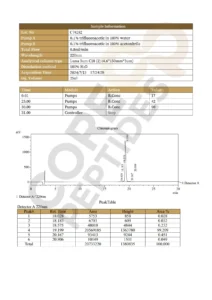
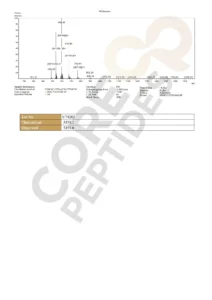
High-Performance Liquid Chromatography (HPLC): This analytical technique isolates and measures each component within a sample batch. Our HPLC checks confirm a purity level of $\ge 99\%$, ensuring your experimental environment remains free of manufacturing anomalies.
-
Mass Spectrometry (MS): This analytical step validates the identity of the compound by measuring its precise molecular weight, ensuring that the actual sequence matches the true synthetic foxo4 dri sequence.
-
Vacuum-Sealed Lyophilization: Freeze-drying inside an oxygen-free vacuum environment removes moisture, stabilizing the peptide bonds for long-term storage.
How to Evaluate This foxo4-dri peptide Before Buying
To maintain data integrity and protect your lab assays from cross-contamination, verify these key factors before completing your checkout:
-
Examine the Certificate of Analysis (COA): Every valid COA must showcase a clear, single peak on the HPLC graph matching your specific vial’s batch number.
-
Validate Product Labeling Language: Ensure your vendor provides explicit “For Laboratory Research Use Only” warnings to satisfy international safety guidelines.
-
Verify Shipping Handling Standards: Check that the vendor uses insulated, temperature-controlled packaging to prevent peptide degradation during transit.
foxo4-dri benefits, Storage, Handling, or Usage Considerations
Because synthetic foxo4-dri peptide structures are fragile, improper handling can denature the sequences and compromise your experimental results.
Storage of Unopened Vials
Keep dry, raw vials stored away from direct light and ambient humidity. For immediate use within a brief multi-week window, maintaining temperatures between 2°C and 8°C is sufficient. For long-term lab archives, freeze the vials at -20°C inside a manual-defrost unit.
Reconstitution Best Practices
To transition the lyophilized cake into an active testing reagent, labs utilize specific preparation workflows:
-
Solvent Selection: Reconstitution typically requires sterile bacteriostatic water or laboratory saline solutions, depending on your target cell environment.
-
Fluid Introduction: Gently run the solvent down the inner glass wall of the vial. Do not spray fluid directly onto the powder cake.
-
Dissolving Process: Avoid mechanical vortex mixers or shaking. Gently roll the vial between your palms until the solution becomes completely transparent. Shaking can fracture the delicate peptide bonds.
Post-Reconstitution Lifespan
Once liquid introduction occurs, structural stability drops. Store liquefied peptides on a steady internal shelf between 2°C and 8°C. Avoid the refrigerator door to prevent regular movement or slamming from causing mechanical shock. For optimal data accuracy, utilize your reconstituted solution within a 14-day timeline [verify with brand/source].
Expert Insight / Pro Tip
Analytical Pro-Tip: When planning a foxo4-dri dosage scale for cell assays, construct a comprehensive foxo4-dri dosage chart that maps baseline concentrations against cellular senescent markers (like beta-galactosidase expression). In vitro studies reveal that senolytic clearance rates depend heavily on cell density. Introducing your liquefied foxo4 dri reagent when cultures have reached absolute confluence ensures you can accurately measure senescent clearing without masking regular cellular turnover rates.
Why Choose CorePeptidesOfficial.com?
CorePeptidesOfficial.com provides global laboratories with pure, traceable research chemicals:
-
Full Traceability: We offer clear, accessible paths to fresh HPLC and mass spectrometry data sheets for every single batch, ensuring you verify structural authenticity prior to initiating testing.
-
Robust Vial Integrity: Our vials feature thick borosilicate glass, durable rubber stoppers, and tamper-evident flip caps to lock out oxygen and humidity.
-
Compliant Logistics Control: All orders are packed inside insulated, shock-absorbent containers to protect structural stability from transit hazards.
Common Mistakes to Avoid
-
Confusing the DRI Variant with Standard L-Chains: Using a non-inverted L-amino acid foxo4 chain instead of the true D-retro-inverso compound will result in rapid enzymatic breakdown, skewing your longevity assay models.
-
Subjecting Vials to Auto-Defrost Cycles: Storing raw peptide vials inside a standard, auto-defrosting freezer exposes your samples to regular heating cycles designed to clear frost. These small temperature spikes will degrade delicate peptide sequences over time.
-
Mechanical Agitation After Reconstitution: Shaking or vibrating a liquefied peptide vial breaks down the molecular bonds of the chain, invalidating your experimental results.
-
Overstating Immediate Clearing Expectations: Expecting uniform cellular clearance without first running baseline titration metrics can lead to inaccurate observations regarding potential foxo4 dri side effects or toxicity margins.
Final Buying Guidance
When your research design requires tracking senolytic clearance pathways, p53 protein accumulation, or extracellular matrix restoration, the purity of your starting reference material determines the validity of your study.
Ensure your laboratory equipment is properly calibrated for a high-purity foxo4-dri profile before starting your preparation. To purchase fully verified, independently tested reference materials, visit CorePeptidesOfficial.com to browse our inventory, download current batch certificates, and complete your checkout securely.
Frequently Asked Questions
1. What does the “DRI” designation mean in a foxo4-dri peptide?
The DRI marker stands for D-Retro-Inverso. This means the peptide is synthesized using reversed D-amino acids rather than standard L-amino acids. This configuration allows the molecule to maintain its structural targeting while resisting enzymatic breakdown in laboratory cultures.
2. How should a 10mg foxo4 dri vial be stored upon arrival?
Unopened vials should be stored in a dark, cool space at 2°C to 8°C for immediate use, or frozen at -20°C inside a manual-defrost scientific freezer to safely preserve long-term structural integrity.
3. What is the main objective of a foxo4-dri senolytic peptide study?
The primary goal is to study how the peptide disrupts the binding process between internal foxo4 and p53 proteins. This allows p53 to travel to the nucleus and selectively trigger cell death in damaged senescent cells.
4. Are there any documented foxo4 dri side effects in laboratory models?
In baseline animal testing, major structural toxicity or unexpected foxo4 dri side effects are rarely documented when adhering to exact parameters. However, excessive concentrations or incorrect dilution profiles can lead to off-target cell disruption or alter healthy cell survival rates within unoptimized lines.
5. Where can I find a verified foxo4-dri dosage chart for calculation?
Because specific testing requirements vary by cell line, researchers develop their active foxo4 dri dosage parameters by consulting modern peer-reviewed literature and utilizing high-precision metric balances during validation testing.
Certificate of Analysis

HPLC
Mass Spectrometry
Be the first to review “FOXO4-DRI ( 10mg )”
Related products


Peptides
Reviews
There are no reviews yet.