

Decapeptide 200mg: The Comprehensive Laboratory Buying Guide
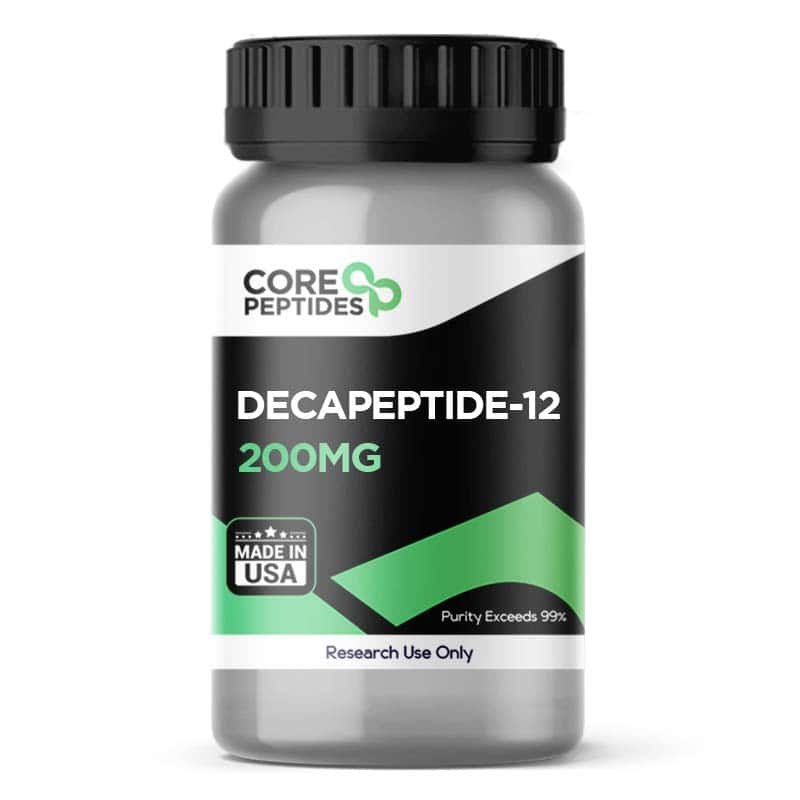
When purchasing a decapeptide compound for biochemical analysis, selecting a reliable product requires looking beyond surface-level claims. In the research chemical space, precise amino acid structural integrity is vital. Minor variations in synthesis or residual solvents can alter your cellular assay outcomes. This guide breaks down the technical specifications, quality standards, and evaluation protocols for decapeptide-12 200mg vials at CorePeptidesOfficial.com.
Quick Facts & Decapeptide Highlights
-
Product Type: Synthetic oligopeptide chain consisting of ten amino acids (deca peptide structure).
-
Primary Compound: Lumixyl peptide sequence, commonly cataloged as decapeptide-12.
-
Total Vial Content: 200mg of highly stable, lyophilized (freeze-dried) powder.
-
Purity Target: Minimum $\ge 99\%$ purity verified via individual batch HPLC analysis.
-
Physical Format: Sealed glass injection vial containing a dense, uniform white peptide cake.
-
Intended Use: Exclusively for in vitro laboratory replication, cell culture testing, and biochemical assays. Not for human consumption.
-
Storage Protocol: Stable for short transit intervals at room temperature. Long-term archiving requires storage at -20°C.
-
Best-Fit Buyer: Academic institutions, independent laboratories, and research professionals searching for premium-grade decapeptide 12 for sale.
What the decapeptide Is
To accurately evaluate this chemical class, researchers must establish exactly what is decapeptide structural science and how specific sequence adjustments change its behavior.
A decapeptide is any peptide chain composed of exactly ten amino acid residues linked by peptide bonds. While the general term applies broadly across biochemistry, distinct modifications alter their functions entirely. For instance, casein decapeptide is an extract derived from milk proteins studied primarily for its potential binding affinity with neural receptors in stress models.
By contrast, the synthetic sequence of decapeptide-12 is structurally engineered to interact with localized enzyme pathways. It consists of a precise sequence of amino acids designed to serve as a competitive inhibitor against tyrosinase enzymes in cellular models. Because of this specialized design, buying an authentic, single-agent decapeptide 12 peptide is essential to isolate your testing variables.
You may also see related terms like decapeptide 52 or decapeptide-52 during procurement. While closely related in length, decapeptide-52 targets entirely different structural pathways, typically focused on hair follicular models. Selecting the correct variant ensures your research lines up with your hypotheses.
Key Benefits and Research Use Cases
Biochemical laboratories purchase decapeptide 12 to study biological pathways across multiple tissue culture frameworks. Common research lines of inquiry include:
Tyrosinase Enzyme Inhibition
The primary focus of decapeptide-12 research involves mapping its interaction with tyrosinase. This enzyme drives melanin production in cellular models. Investigators introduce a liquid decapeptide solution into melanocyte cell cultures to observe if the compound down-regulates melanin synthesis without causing cellular toxicity.
Cellular Vitality and Tissue Models
Unlike older, harsh enzymatic inhibitors, researchers study the decapeptide 12 peptide chain to analyze cellular safety baselines. In vitro testing helps determine whether this specific sequence reduces melanin expression while maintaining cell wall integrity and avoiding inflammatory distress.
Synergistic Complexing in Solutions
Scientists frequently study how the compound performs when combined with other skin-rejuvenation molecules, like hyaluronic acid or specific tripeptides. These experiments evaluate how a blended decapeptide solution affects overall skin-cell turnover rates and extracellular matrix structural stability.
Decapeptide Quality, Purity, and Testing Standards
The research chemical market can sometimes feel unpredictable. Many suppliers distribute under-dosed materials or sequences contaminated with synthesis residues. When looking for decapeptide 12 for sale, you cannot verify physical purity or structural correctness with a simple visual check.
CorePeptidesOfficial.com addresses these safety concerns through a rigid, multi-stage testing workflow:
+-------------------------------------------------------------------------+
|                  CORE PEPTIDES THREE-TIER QUALITY WORKFLOW              |
+-------------------------------------------------------------------------+
|  1. HPLC COMPLIANCE        |  2. MASS SPECTROMETRY    | 3. VACUUM LOCK  |
|                            |                          |                 |
|  Quantifies composition to |  Confirms molecular mass | Lyophilized and |
|  ensure purity levels      |  to verify the authentic | sealed to lock  |
|  meet or exceed 99%.       |  ten-amino-acid chain.   | out moisture.   |
+----------------------------+--------------------------+-----------------+
-
High-Performance Liquid Chromatography (HPLC): This analytical technique isolates and measures each component in a batch. Our HPLC checks confirm a purity level of $\ge 99\%$, ensuring your experimental environment remains entirely free of manufacturing anomalies.
-
Mass Spectrometry (MS): This step validates chemical identity by confirming its exact molecular weight. This guarantees your vial contains the authentic ten-amino-acid chain rather than a generic substitute.
-
Lyophilization Security: Freeze-drying under strict vacuum conditions removes all moisture, locking in structural stability and extending the product’s shelf life.
How to Evaluate This decapeptide Before Buying
To maintain data integrity and prevent cross-contamination in your lab, verify the following compliance factors before completing your checkout:
-
Review the Batch-Specific Certificate of Analysis (COA): Every valid COA must feature recent dates and a clean HPLC chart that matches the batch code printed on your product label.
-
Check the Total Milligram Content: Make sure your vial contains the correct quantity for your testing scale. Our decapeptide vials carry a 200mg payload, making them ideal for high-throughput, multi-stage dilution schedules.
-
Inspect Product Labels: Ensure the packaging includes unambiguous “For Research Use Only” markers. This language clearly distinguishes the material from consumer-grade skincare products.
Storage, Handling, and Usage Considerations
Because synthetic deca peptide chains are fragile, improper handling can denature the sequences and compromise your experimental results.
Unopened Vials
Keep dry, lyophilized vials away from direct light and moisture. For immediate use within a few weeks, storage at 2°C to 8°C is sufficient. For long-term archiving, keep vials frozen at -20°C inside a manual-defrost scientific freezer.
Reconstitution Protocols
To convert the dry white cake into a usable liquid testing reagent, researchers follow strict laboratory steps:
-
Solvent Selection: Introducing the peptide into cell cultures typically relies on sterile bacteriostatic water or laboratory-grade sterile saline solution.
-
Fluid Introduction: Never spray the liquid solvent directly onto the powder cake. Rest your needle against the inner glass wall of the vial, allowing the fluid to trickle down slowly.
-
Dissolving the Material: Avoid shaking or mechanical vortex mixing. Gently rotate your wrist to swirl the vial until the solution becomes completely clear and uniform. Shaking can break down the peptide sequences, rendering the sample useless.
Post-Reconstitution Lifespan
Once dissolved, the compound’s structural durability declines significantly. Reconstituted solutions must be stored between 2°C to 8°C on a stable internal shelf. Avoid the refrigerator door, where frequent movement and slamming can cause temperature spikes and structural agitation. For optimal data accuracy, utilize the liquefied compound within a 14-day testing window [verify with brand/source].
Expert Insight / Pro Tip
Analytical Pro-Tip: When preparing a diluted decapeptide solution for enzyme inhibition tracking, match the pH of your solvent to the target cellular matrix. Tyrosinase interactions are highly sensitive to pH shifts. Maintaining a steady solution environment between 6.5 and 6.8 pH prevents unexpected structural changes and ensures highly repeatable assay results.
Why Choose CorePeptidesOfficial.com?
CorePeptidesOfficial.com supports global research institutions by removing all uncertainty from chemical procurement:
-
Total Traceability: We offer clear, accessible paths to fresh HPLC and mass spectrometry data sheets for every single batch, ensuring you verify structural authenticity prior to initiating testing.
-
Secure Vacuum Seals: Our glass vials feature robust, chemical-resistant rubber stoppers and tamper-evident flip-off aluminum caps that lock out oxygen and humidity.
-
Protected Logistics Control: All domestic and international orders are packed in durable, temperature-insulated materials to prevent transit damage and safeguard the structural stability of the peptides.
Common Mistakes to Avoid
-
Confusing Decapeptide-12 with Decapeptide-52: Ordering the wrong chain variant can completely invalidate your research data, as these two sequences target different biochemical pathways.
-
Subjecting Vials to Auto-Defrost Cycles: Storing raw peptide vials inside a standard, auto-defrosting freezer exposes your samples to regular heating cycles designed to clear frost. These small temperature spikes will degrade delicate peptide sequences over time.
-
Mechanical Agitation After Reconstitution: Shaking or vibrating a liquefied peptide vial breaks down the molecular bonds of the tetrapeptide chain, invalidating your experimental results.
Final Buying Guidance
When your research design requires analyzing tyrosinase inhibition pathways, melanocyte behavior, or enzymatic safety baselines, the purity of your starting reference material determines the validity of your study.
Ensure your laboratory equipment is calibrated for a high-purity decapeptide profile before starting your preparation. To purchase fully verified, independently tested reference materials, visit CorePeptidesOfficial.com to browse our inventory, download current batch certificates, and complete your checkout securely.
Frequently Asked Questions
1. What is the difference between decapeptide-12 vs decapeptide-52?
While both are ten amino acids long, decapeptide-12 features a distinct primary sequence engineered to study tyrosinase enzyme pathways. Decapeptide-52 utilizes a different sequence configuration focused primarily on cellular models for hair growth and follicular development.
2. How should I store a 200mg decapeptide vial upon arrival?
Unopened vials should be stored in a dark, cool environment at 2°C to 8°C for immediate use, or frozen at -20°C inside a manual-defrost scientific freezer for long-term storage.
3. What is the primary purpose of a laboratory decapeptide solution?
In research settings, a reconstituted decapeptide solution is introduced to cell cultures to measure competitive inhibition rates against tyrosinase, monitor changes in melanin synthesis, and evaluate cellular safety parameters.
4. What is casein decapeptide?
Unlike synthetic decapeptide 12, casein decapeptide is a peptide fragment derived from milk proteins. It is primarily used to study peptide-receptor binding dynamics in central nervous system and stress-response research models.
5. How can I confirm the purity of decapeptide 12 for sale online?
Purity can be confirmed by reviewing independent High-Performance Liquid Chromatography (HPLC) and Mass Spectrometry (MS) testing data sheets. CorePeptidesOfficial.com provides batch-verified documentation for all research materials.
Be the first to review “Decapeptide-12 ( 200mg )”
Related products
Peptides
Reviews
There are no reviews yet.