

Cartalax Peptide 20mg: The Ultimate Research Buying Guide
When identifying reliable sources for specialized synthetic bioregulators, laboratory investigators frequently find inconsistencies across the online marketplace. Unverified purity claims, missing batch tracking, and generic descriptions can compromise cellular data and laboratory outcomes. This comprehensive guide clarifies the exact molecular profile, independent quality metrics, and storage considerations for the premium cartalax 20mg vial from CorePeptidesOfficial.com. Our goal is to provide researchers with the peer-reviewed science and verification workflows required to make an informed, secure purchase.
Quick Facts & Cartalax Peptide Highlights
-
Product Type: Synthetic short-chain regulatory tripeptide.
-
Molecular Formula: $\text{C}_{12}\text{H}_{19}\text{N}_3\text{O}_8$ (Sequence: Ala-Glu-Asp / AED).
-
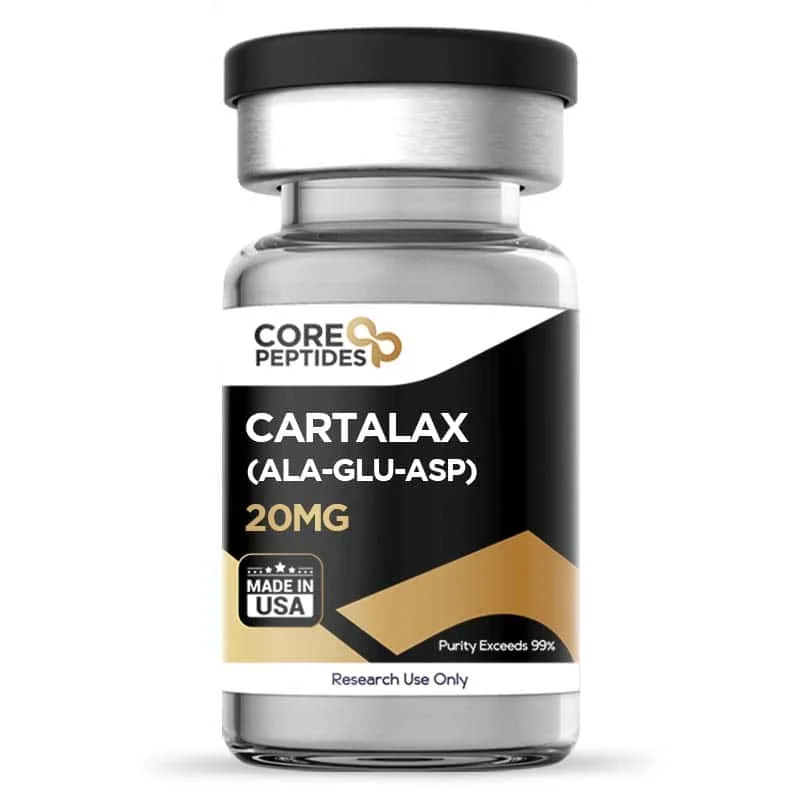
Total Content: 20mg lyophilized (freeze-dried) powder per vial.
-
Purity Standard: Verified $\ge 99\%$ purity through independent third-party HPLC and mass spectrometry analysis.
-
Format: Vacuum-sealed sterile glass vial containing a stabilized white cake structure.
-
Intended Use: Exclusively for in vitro laboratory replication, cell cultures, and biochemical research testing models. Strictly not for human consumption or veterinary use.
-
Storage Requirements: Transits safely at ambient temperature. Long-term laboratory archiving requires storage at -20°C.
-
Ideal Fit: Biotech laboratories, clinical research institutions, and academic independent researchers looking to buy cartalax usa reference materials with zero batch variability.
What is the Cartalax Peptide?
To answer what is cartalax or what is cartalax peptide, we must look to the field of short-chain cellular signaling molecules. Developed originally within specialized bioregulation research programs, cartalax peptide is a synthetic tripeptide consisting of just three amino acids: L-Alanine, L-Glutamic Acid, and L-Aspartic Acid arranged in the linear sequence Ala-Glu-Asp (AED).
Unlike large, complex hormone sequences that rely on surface-level receptor pathways, the exceptionally low molecular weight of this compound (333.29 g/mol) allows it to freely cross cellular membranes. Preclinical data indicates that cartalax directly localizes within the cell nucleoplasm. From there, it interacts with chromatin and binds to sequence-specific DNA sections to modulate gene expression without triggering common secondary-messenger feedback loops. Because it is built entirely from defined amino acids via high-precision solid-phase peptide synthesis (SPPS), it provides exceptional stability and data reproducibility compared to primitive animal-derived tissue fractions.
Key Cartalax Peptide Benefits and Use Cases
Biotech investigators actively source cartalax for sale to study cellular mechanisms across several specialized connective tissue and longevity models:
Connective Tissue Homeostasis & Collagen Expression
The structural code of the Ala-Glu-Asp sequence closely mimics localized segments found within Type XI collagen chains. Investigators use the peptide in cartilage explant cultures to evaluate its impact on key extracellular matrix components, including chondrocyte signaling, Type II collagen synthesis ($\text{COL2A1}$), and aggrecan gene expression profiles.
Cellular Senescence & Geroprotective Tracking
One of the most heavily documented cartalax peptide benefits under active review is its influence on cellular aging markers. In replicative senescence models (where aging cells cease division and release inflammatory signaling), exposure to this tripeptide has been shown to downregulate expression levels of cell-aging markers such as p16, p21, and p53. Concurrently, researchers track its capacity to upregulate SIRT6, a nuclear enzyme essential for DNA repair and longevity paths.
Cellular Resilience to Oxidative Stress
In environments subjected to physical or inflammatory loading, cellular degradation typically accelerates due to free-radical damage. Preclinical research evaluates how the tripeptide supports mitochondrial integrity, balances tissue degradation, and protects cultured connective cells from undergoing premature apoptosis.
Quality, Purity, and Testing Standards
Because short-chain molecules can easily hide impurities if manufacturing cycles are uncalibrated, validating your procurement source is mandatory for reliable experimental data. CorePeptidesOfficial.com mitigates research risk by executing multi-stage analytical confirmation workflows for every single batch:
-
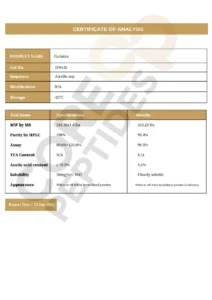
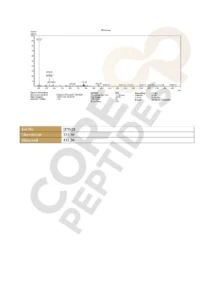
High-Performance Liquid Chromatography (HPLC): This technique isolates and evaluates structural components in a sample. Our HPLC mapping guarantees a purity level of $\ge 99\%$, ensuring your testing environment is completely shielded from residual synthesis reagents, truncated sequences, or heavy metals.
-
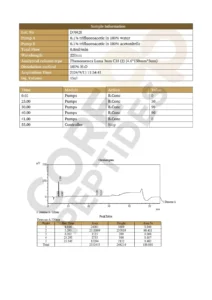
Mass Spectrometry (MS): While HPLC measures concentration purity, MS evaluates molecular identity by assessing the precise mass-to-charge profile. This step confirms the precise sequence matches $\text{C}_{12}\text{H}_{19}\text{N}_3\text{O}_8$ with zero structural flaws.
-
Controlled Lyophilization: Freeze-drying under sterile conditions extracts all ambient moisture, forming an ultra-stable powder block. This structural stabilization ensures long-lasting shelf life and predictable dilution measurements.
How to Evaluate This cartalax Before Buying from corepeptidesofficial.com
When cross-referencing available digital platforms to buy research peptides, bypass superficial marketing claims and verify the vendor’s compliance features through these key steps:
-
Inspect the Batch-Specific Certificate of Analysis (COA): A trustworthy supplier must display clear, downloadable HPLC/MS charts. Verify that the batch registration number on the analytical sheet precisely mirrors the tracking code printed on your product’s outer vial.
-
Confirm Intended-Use Labels: Ethical vendors preserve strict alignment with global biochemical standards. The vial artwork must prominently feature “For Research Use Only” warnings to differentiate the material from consumer-grade pharmaceuticals.
-
Analyze Historical Cartalax Reviews: When evaluating peer-to-peer data, focus strictly on feedback regarding dissolving transparency, reconstitution stability, and batch reproducibility rather than unverified medical transformations.
Storage, Handling, and Reconstitution Considerations
To prevent premature degradation of your cartalax peptide sequence, implement strict climate management protocols inside your laboratory facility:
Raw Powder Storage
Unopened, vacuum-sealed vials must be stored inside an analytical freezer at -20°C for optimal long-term security. If your laboratory model requires immediate sample usage within 30 to 60 days, maintaining the vial within a laboratory refrigerator at 2°C to 8°C is acceptable. Keep all raw vials completely shielded from direct light exposure and humidity.
Reconstitution Best Practices
To transition the lyophilized 20mg powder block into an active liquid testing reagent, researchers introduce a sterile solvent:
-
Solvent Compatibility: High-purity bacteriostatic water or sterile standard saline is typical.
-
The Low-Pressure Fluid Entry: Peptides are delicate sequences. Do not project your solvent stream directly into the dry powder bed. Rest your syringe needle against the inner glass wall of the vial, and introduce the liquid drop-by-drop so it flows down smoothly.
-
Gentle Dissolving: Avoid shaking or mechanical vortex mixing, as severe kinetic force can alter the structural folding of the molecule. Slowly rotate your wrist to roll the vial in circles until the tripeptide dissolves into a perfectly crystal-clear, sediment-free liquid.
Liquefied Shelf Life & Stability
Once reconstituted, the chemical framework becomes highly vulnerable to environmental changes. Store the active solution at 2°C to 8°C on a secure, stable shelf. Avoid refrigerator doors where repetitive shaking forces from opening and closing can degrade the fluid. For accurate, reproducible data collection, try to utilize your reconstituted solution within a 21-day testing window [verify with brand/source].
Expert Insight / Pro Tip
Analytical Pro-Tip: Short tripeptides like Ala-Glu-Asp possess an exceptionally high level of hydrophilic (water-soluble) properties due to their exposed carboxylic groups. If your research model evaluates specific cell cultures over brief periods, avoid introducing complex organic solvents like DMSO. Utilizing simple, sterile phosphate-buffered saline (PBS) maintains ideal physiologic pH balance while avoiding external solvent toxicity in your data matrices.
Why Choose CorePeptidesOfficial.com?
CorePeptidesOfficial.com remains a top choice for global clinical research centers by focusing purely on open analytical metrics and structural verification:
-
Uncompromised Transparency: We provide downloadable, fresh HPLC and mass spectrometry data sheets for every single batch, ensuring you verify structural authenticity prior to initiating testing.
-
Secured Structural Seals: Every vial is preserved with a thick chemical-resistant rubber plug and a tamper-evident flip-off aluminum cap, locking out oxygen and keeping the vacuum intact.
-
Predictable Shipping Protection: All packages destined to buy cartalax usa or international locations are wrapped in thick, climate-insulated packaging layers to shield the materials from transit friction and temperature fluctuations.
Common Mistakes to Avoid
-
Confusing Secondary Compounds: Do not cross-contaminate your data by confusing a synthetic, linear tripeptide structure with raw animal-derived cartilage extracts. Animal extracts contain unquantifiable protein variations that will invalidate modern precision in vitro testing models.
-
Mistakenly Applying Consumer Dosages: Searching for a cartalax peptide dosage chart will primarily yield anecdotal consumer metrics or outdated veterinary data. Because this material is optimized for laboratory settings, your liquid solution concentrations must be determined using precise nanomolar ($nM$) scaling tailored to your cell culture protocols.
-
Improper Freezer Cycling: Storing your raw peptide vials inside a consumer-grade “auto-defrosting” freezer exposes your samples to small heating waves that automatically trigger to clear ice. These recurring heat spikes degrade short-chain peptides over time. Always utilize specialized, manual-defrost scientific storage freezers.
Final Buying cartalax peptide Guidance
When your experimental design relies on assessing cellular senescence, tissue longevity, or structural protein synthesis, the chemical integrity of your starting material dictates the validity of your entire study.
Ensure your instrumentation profiles are configured for a true 20mg linear concentration before beginning reconstitution. To purchase fully verified, independently analyzed reference materials, visit CorePeptidesOfficial.com to browse our inventory, check recent batch parameters, and complete your checkout securely.
Frequently Asked Questions
1. What is the fundamental difference between Cartalax vs BPC-157?
BPC-157 is a 15-amino-acid pentadecapeptide that primarily triggers surface-level growth factors, angiogenesis (new blood vessel formation), and nitric oxide pathways to speed up generalized soft-tissue wound repair. In contrast, cartalax is a 3-amino-acid tripeptide that functions as a nuclear bioregulator. It crosses the cell wall to bind directly with DNA strands, altering gene expression levels connected specifically to cartilage matrix synthesis and cell aging.
2. Can I find verified cartalax reviews from clinical studies?
Peer-reviewed data regarding the Ala-Glu-Asp sequence is thoroughly indexed inside professional scientific databases like PubMed and Europe PMC. These formal papers function as the definitive “reviews” for researchers, documenting changes in fibroblast expansion, p16 gene suppression, and Type II collagen production rates under controlled lab conditions.
3. What are the known cartalax peptide side effects observed in lab research?
In isolated cell culture configurations and controlled animal models, researchers note zero structural toxicity, mutagenic traits, or adverse cellular stress reactions. Because the molecule is an incredibly short chain composed of natural amino acids, it demonstrates excellent biological tolerability across all published literature.
4. How should I calculate my liquid solution concentration after it arrives?
Your concentration depends entirely on the volume of bacteriostatic liquid you introduce. For example, injecting 2mL of sterile water into your cartalax peptide 20mg vial produces a clear reference solution yielding a concentration of 10mg per mL.
5. Why is the 20mg presentation preferred over smaller 5mg or 10mg vials?
The 20mg format provides high-throughput laboratories with an ideal volume for continuous, multi-well cell culture plating. It minimizes individual vial preparation tasks, reduces plastic and glass waste across long-term studies, and ensures a highly uniform compound concentration across large experimental groups.
Certificate of Analysis
HPLC
Mass Spectrometry
Be the first to review “Cartalax ( 20mg )”
Related products
Peptides
Reviews
There are no reviews yet.