
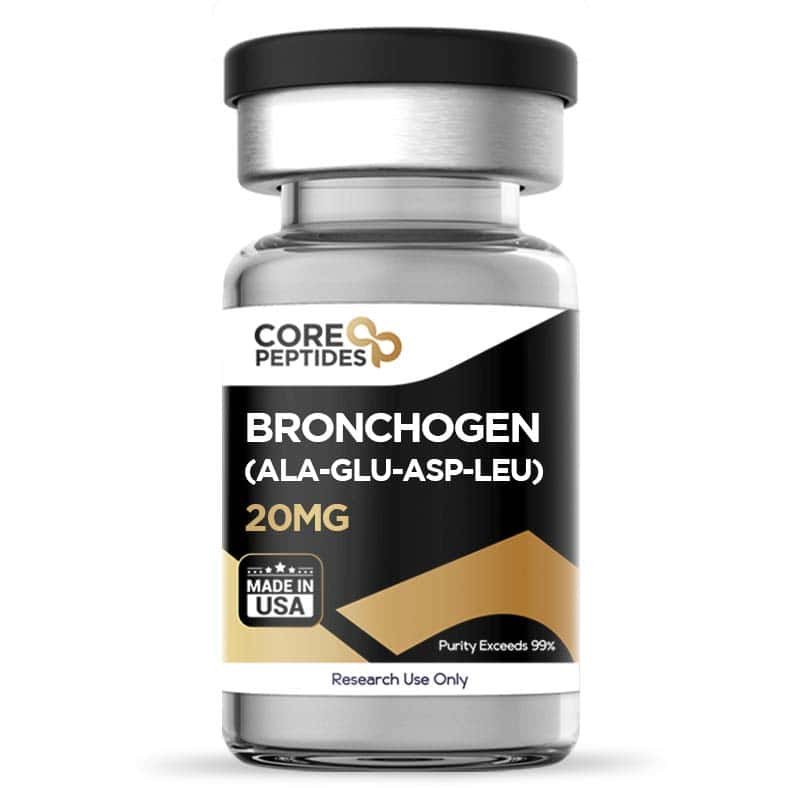

Buy Bronchogen 20mg Peptide: Sourcing High-Purity Bioregulator Vials
When clinical laboratories and molecular biology teams scale up their respiratory cellular models, locating a reliable source for the short-chain peptide bronchogen is a top operational priority. As a highly specialized bioregulator, this compound is engineered to interact directly with specific DNA strands to modulate cellular transcriptions. For institutional procurement managers and independent principal investigators, securing a stable supply of pure, lyophilized bronchogen 20mg vials is essential to keeping background experimental variables tightly controlled.
To protect your research data and optimize your quarterly inventory budget, selecting a professional supplier that delivers fully transparent batch verification is critical. At CorePeptidesOfficial.com, we provide independent, third-party verified bioregulator peptides designed to meet the strict requirements of modern cell culture assays.
Quick Facts / Product Highlights
-
Product Name: Bronchogen (20mg Total Mass)
-
Product Type: Short-Chain Synthetic Khavinson Bioregulator Peptide
-
Physical Format: Lyophilized (freeze-dried) vacuum-sealed powder cake
-
Purity Rating: Minimum 98%+ purity, verified by independent third-party laboratory testing
-
Primary Target Research: Epithelial cellular transcription, respiratory mucosal lining models, and DNA-protein interaction tracking
-
In-Stock Status: Available for immediate global dispatch, secure shipping, and high-volume wholesale bulk tiers
-
Intended Use: Exclusive laboratory research and development purposes only
What Is Bronchogen Peptide? Understanding the Bioregulator Architecture
Before finalizing your checkout and establishing a laboratory testing protocol, it is important to understand what is bronchogen peptide at a molecular level.
Developed as part of the Khavinson bioregulator peptide framework, Bronchogen is a synthetic short peptide chain consisting of four amino acids (a tetrapeptide). Its precise peptide sequence is Ala-Glu-Asp-Leu (Alanine-Glutamic Acid-Aspartic Acid-Leucine) [verify with brand/source].
Unlike longer, complex signaling compounds that bind exclusively to cell-surface receptors, a short-chain bronchogen bioregulator is small enough to penetrate the cell membrane and nuclear envelope. Once inside the cell nucleus, it directly binds with specific complementary sequences on double-stranded DNA. This precise molecular docking mechanism modulates the epigenetic transcription of target proteins without permanently altering the underlying genetic structure, making it a highly reliable asset for cellular baseline tracking.
Key Benefits and Research Use Cases of Bronchogen
When molecular laboratories scan for bronchogen for sale, they are typically evaluating the compound’s ability to influence structural protein expressions within highly specific cellular lineages.
1. Epigenetic Epithelial Profiling
The primary focus of bronchogen peptide benefits in laboratory literature centers on its interaction with bronchial epithelial tissue cultures. Researchers use the compound to observe how it impacts the expression of structural cytokeratins and mucin genes, tracking the rate at which tissue cultures maintain their cellular integrity when exposed to chemical or inflammatory stress environments.
2. Cellular Longevity and Proliferation Tracking
In aging cell culture models, investigators utilize bronchogen peptide variations to trace downstream changes in apoptosis (programmed cell death) pathways. By monitoring the balance of pro-survival versus pro-apoptotic genetic signals, labs can evaluate how short-chain peptides influence the overall reproductive life cycle of respiratory lineage cells.
Sourcing Matrix: Bronchogen vs Chonluten
To maximize the efficiency of your procurement budget, it is critical to understand the distinction between bronchogen vs chonluten, as these two popular lung-targeting bioregulators are frequently compared but feature distinct structural frameworks.
| Technical Sourcing Metric | Bronchogen Peptide | Chonluten Peptide |
| Amino Acid Length | 4 Amino Acids (Tetrapeptide) | 3 Amino Acids (Tripeptide) |
| Sequence Framework | Ala-Glu-Asp-Leu [verify] | Glu-Asp-Gly [verify] |
| Primary Action Channel | Epigenetic epithelial transcription | Macrophage & localized immune pathway tracing |
| Synthesis Consistency | Highly stable; rapid synthesis yield | Highly stable; distinct molecular weight profile |
| Primary Target Asset | Bronchial mucosal lining integrity models | Inflammatory cytokine regulation models |
Practical Laboratory Allocation: Navigating Bronchogen Dosage Protocols
Establishing a precise bronchogen dosage curve requires calculating metrics relative to the specific fluid volume introduced during laboratory reconstitution. Because these compounds are restricted entirely to laboratory environments, trying to establish a bronchogen peptide dosage based on consumer retail advice or informal public wellness forums introduces immediate scientific error.
To avoid data skewing, ignore consumer-centric listings such as retail bronchogen capsules or unverified consumer wellness drops. True clinical-grade assays rely on pure, lyophilized powder mixed on-site.
The following table serves as a baseline reference for fluid allocation when a standard bronchogen 20mg vial is reconstituted using 2mL of Sterile Bacteriostatic Water:
| Liquid Aliquot Withdrawn | Resulting Bronchogen Peptide Dosage | Primary Experimental Target |
| 0.02 mL (approx. 2 units) | 200 mcg | Micro-Tracing Cellular Kinetics |
| 0.05 mL (approx. 5 units) | 500 mcg | Standard Baseline Transcription Assay |
| 0.10 mL (approx. 10 units) | 1,000 mcg (1mg) | Advanced High-Concentration Model |
Quality, Purity, and Testing Standards
Because short-chain peptides are highly sensitive to manufacturing accuracy, choosing where to buy your inventory requires absolute transparency. Sourcing from unverified marketplaces can result in under-dosed vials or cross-contamination that alters cellular outcomes.
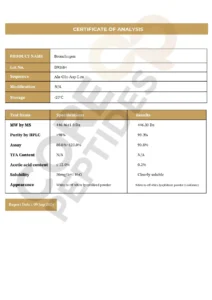
To ensure full compliance with internal quality control frameworks, CorePeptidesOfficial.com backs every batch with a multi-layered verification protocol.
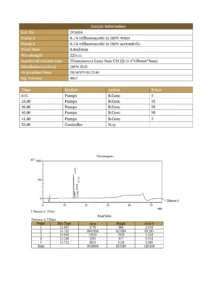
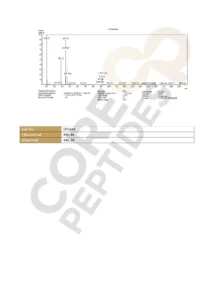
High-Performance Liquid Chromatography (HPLC)
Every single production run must clear independent HPLC testing before it is listed for sale. This process isolates the compound to confirm its purity score. We enforce a strict baseline requiring a minimum 98%+ purity rating across all inventory batches.
Mass Spectrometry (MS) Verification
Mass spectrometry charts the precise molecular weight of the tetracomponent chain. This test ensures that the sequence has been assembled correctly and that no residual solvents or impurities remain in the finished product.
Storage, Handling, and Reconstitution Considerations
To prevent accidental degradation of your bronchogen peptide material during preparation, your laboratory staff should follow a standardized handling protocol.
Storage Protocols
-
Lyophilized Cake: Safely store unconstituted dry vials at -20°C for up to 24 months. Keep away from direct light exposure.
-
Reconstituted Solution: Once mixed with liquid, store inside a secure refrigerator at 2–8°C and complete your testing timeline within 21 to 30 days to avoid potency drops [verify with brand/source].
Common Sourcing Mistakes to Avoid
-
Purchasing Pre-Mixed Liquids: Always avoid suppliers offering pre-dissolved liquid versions of bioregulators. Peptides begin degrading immediately when exposed to water. High-grade research requires purchasing dry powder and reconstituting it inside your own lab environment.
-
Overlooking Independent COAs: Do not trust vendors who fail to publish traceable batch numbers or matching independent certificates of analysis. If the paperwork is missing or out of date, your laboratory data is at immediate risk.
Expert Insight / Pro Tip
When monitoring epigenetic transcription with a short peptide like bronchogen, remember that its DNA-binding efficiency is highly dependent on the baseline health of the histone proteins inside your culture media. If your cell lines are concurrently exposed to histone deacetylase (HDAC) inhibitors, the target sequence binding may be blunted, leading to unrepeatable baseline variations.
Why Buy Bronchogen from CorePeptidesOfficial.com?
CorePeptidesOfficial.com is the trusted premium supplier for institutional and private research facilities. We focus completely on strict manufacturing control and comprehensive transparency.
-
Guaranteed Mass Uniformity: Our advanced synthesis ensure that the 20mg mass weight is perfectly uniform across every vial in your batch.
-
Bulk Wholesale Pricing Tiers: We offer robust, transparent discount structures directly at checkout, helping you maximize your quarterly laboratory purchasing power.
-
Secure, Impact-Resistant Logistics: All orders are packed in climate-protected, insulated containers to ensure your research materials remain fully stable throughout transit.
Final Sourcing Guidance
The bronchogen peptide represents a highly accurate, reliable asset for modern laboratories tracking short-chain bioregulation and epithelial transcription. To protect your research results and secure clean data, insist on verified third-party laboratory COAs and select a supplier built on absolute verification.
Are you ready to purchase a verified, high-purity batch for your facility? View current bulk pricing tiers and secure your inventory directly on the official CorePeptidesOfficial.com Bronchogen 20mg Product Page.
Frequently asked Questions
1. Where can I buy verified bronchogen peptide online?
You can order high-purity, batch-tested 20mg vials securely through the CorePeptidesOfficial.com Bioregulator Catalog. Every purchase includes comprehensive access to corresponding third-party HPLC/MS verification documents.
2. How much bacteriostatic water should be added to a Bronchogen 20mg vial?
For most standard testing models, adding 2mL of sterile bacteriostatic water is highly recommended. This liquid ratio yields a straightforward concentration of 10mg per mL, making it easy to calculate precise individual micrograms during testing.
3. What are the common bronchogen side effects documented in laboratory logs?
In formal laboratory safety models, documented bronchogen peptide side effects or general bronchogen side effects are minimal to non-existent. Because it acts as an epigenetic signaling modulator rather than a hormone-altering compound, background variable noise remains extremely low.
4. Can I use oral capsules for cellular epithelial research?
No, oral capsules are not suited for precise laboratory environments. Binders, fillers, and digestive enzyme degradation compromise data metrics. True research applications require pure lyophilized powder vials to ensure absolute dose delivery.
5. What is the shelf life of the dry lyophilized powder?
When stored in a deep freezer at -20°C and protected from direct UV light exposure, an unconstituted dry vial remains completely stable for up to 24 months without any loss in potency.
Certificate of Analysis
HPLC
Mass Spectrometry
Be the first to review “Bronchogen ( 20mg )”
Related products
Peptides
Reviews
There are no reviews yet.