
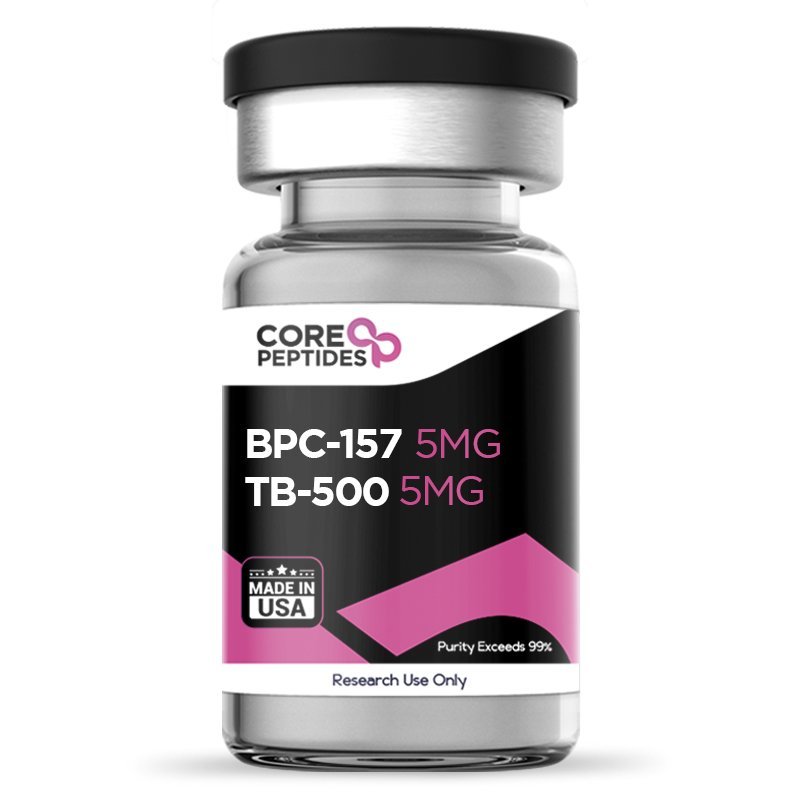
BPC-157 and TB-500: A Complete Research Buyer’s Guide
If you’ve been researching BPC-157 and TB-500, you’ve likely come across this pairing more than once. These two peptides are frequently studied together, and for good reason. Understanding what the blend is, how to evaluate quality, and where to source it responsibly matters especially in a market where consistency is not guaranteed.
Quick Facts / Product Highlights
- Product Type: Lyophilized peptide blend (research use only)
- Contents: BPC-157 (Body Protection Compound-157) + TB-500 (Thymosin Beta-4 fragment)
- Common Blend Format: 10mg BPC-157 / 20mg TB-500 per vial [verify with brand for current SKU]
- Purity Target: ≥98% [verify current CoA on CorePeptidesOfficial.com]
- Testing: Third-party HPLC and MS verification [verify batch-specific CoA]
- Storage: Lyophilized form stable at room temperature short-term; long-term storage at -20°C recommended
- Intended Use: For research purposes only — not for human or veterinary use
- Best For: Research labs, peptide researchers, and informed buyers evaluating quality vendors
What Is the BPC-157 and TB-500 Blend?
BPC-157 and TB-500 are two distinct peptides that have attracted significant attention in research settings.
BPC-157 (Body Protection Compound-157) is a synthetic pentadecapeptide derived from a protein found in gastric juice. It consists of 15 amino acids. It has been studied in cellular and animal research contexts for its interactions with various biological pathways.
TB-500 is a synthetic version of a naturally occurring peptide called Thymosin Beta-4. In the body, Thymosin Beta-4 is present in most tissue types and plays a role in cell building, movement, and differentiation. The TB-500 fragment studied in research is specifically the actin-binding domain of this protein.
When combined into a single vial, researchers get both peptides in one preparation. The blend format — typically 10mg BPC-157 and 20mg TB-500 — reduces the number of separate vials needed for research protocols that involve both compounds.
This is sometimes informally called the “Wolverine Blend” in research communities, a nickname that circulates in grey-market wellness and biohacker spaces. That name carries no scientific designation and is not a formal product category.
Research Areas and Use Cases
The BPC-157/TB-500 combination is typically explored in research involving:
- Tissue repair pathways — both peptides have been examined in preclinical models involving tendon, muscle, and connective tissue
- Angiogenesis research — TB-500 in particular has been studied for its role in blood vessel formation
- Inflammatory response studies — BPC-157 has shown interactions with nitric oxide pathways in animal models
- Nervous system research — BPC-157 has been explored in neurological contexts in rodent studies
- Recovery and regeneration models — both peptides appear frequently in musculoskeletal injury research in animals
Important: These are research-stage findings. No approved clinical use exists for either peptide in humans in most jurisdictions. This product is sold strictly for in vitro or laboratory animal research.
Quality, Purity, and Testing Standards
Peptide quality varies dramatically between suppliers. Here’s what separates reliable research-grade peptides from substandard ones:
Purity Percentage
Research-grade peptides should test at ≥98% purity by HPLC (High-Performance Liquid Chromatography). Anything lower introduces unknowns into your research data.
Third-Party Testing
In-house testing by the vendor is a conflict of interest. Look for suppliers that use independent, accredited laboratories to confirm purity and identity. This is a non-negotiable standard for serious research applications.
Mass Spectrometry (MS) Confirmation
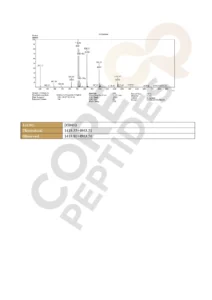
HPLC measures purity, but Mass Spectrometry confirms the peptide is actually what it claims to be — verifying molecular weight and amino acid sequence match. Both tests together give the most complete quality picture.
Batch Traceability
Each vial should carry a batch number. That number should trace back to a specific CoA. If a vendor can’t link a batch number to a document, walk away.
CorePeptidesOfficial.com provides batch-traceable CoA documentation for their peptide products [verify current availability on product pages].
How to Evaluate This Product Before Buying
Before placing any order for research peptides, run through this bpc 157 and tb 500 checklist:
- Find the Certificate of Analysis (CoA) It should be accessible on the product page or by request. Check that it lists: purity %, test method (HPLC/MS), batch number, and the testing lab’s name.
- Verify the Testing Lab Search the lab’s name independently. It should be a real, third-party analytical chemistry or pharmaceutical testing facility — not just “our internal lab.”
- Check the Batch Number The number on your CoA should match what’s on the vial when it arrives. If it doesn’t, that’s a red flag.
- Review the Labeling Legitimate research peptide products include “For Research Use Only – Not for Human Consumption” language. If a vendor omits this, they’re not operating in compliance with standard industry practice.
- Check Storage Instructions The CoA or product page should specify storage conditions. Lyophilized peptides are generally stable at room temperature short-term, but require refrigeration or freezing for extended storage. If a vendor doesn’t mention storage at all, question their product knowledge.
- Look for Reconstitution Guidance Peptide blends ship as lyophilized (freeze-dried) powder. Research buyers should verify what bacteriostatic water or sterile water specifications apply. The vendor should provide this information.
Storage, Handling, and Usage Considerations
BPC-157 and TB-500 in lyophilized form are relatively stable. Here are the standard handling considerations for research use:
- Before reconstitution: Store at -20°C for long-term stability; short-term room temperature storage acceptable in most conditions
- After reconstitution: Store at 2–8°C (refrigerated); use within 30 days or per the vendor’s guidelines [verify]
- Light sensitivity: Protect from direct light; store in opaque or amber vials where possible
- Contamination prevention: Use sterile technique during reconstitution; bacteriostatic water is the standard diluent for most research applications
- Freeze-thaw cycles: Minimize repeated freeze-thaw; aliquot if multiple uses are planned
These apply to research handling in appropriate laboratory settings. This product is not prepared or intended for administration to humans.
Expert Insight: Why the 10mg/20mg Ratio Matters
The 10mg BPC-157 / 20mg TB-500 blend ratio is not arbitrary. In research literature examining both peptides together, TB-500 is typically used at a higher relative quantity than BPC-157. This ratio reflects the dosing patterns seen in existing rodent and in vitro studies. When evaluating any blend, ask whether the ratio reflects established research norms — or just what’s easy to manufacture. A vendor who can explain the rationale for their formulation is a more credible source than one who can’t.
Why Choose CorePeptidesOfficial.com
CorePeptidesOfficial.com operates in the research peptide space with an emphasis on transparency, product documentation, and consistent supply for research buyers.
Key considerations when sourcing from CorePeptidesOfficial.com:
- CoA documentation available for verification [verify current availability]
- Third-party purity testing standard [verify lab details on product pages]
- Clearly labeled research-use-only products
- Stable supply with batch traceability
- Responsive sourcing information for researchers
If you’re sourcing for a research project or lab, the ability to pull a CoA and verify a batch number before your experiment begins is not optional — it’s essential. CorePeptides supports that process.
Common Mistakes to Avoid
- Buying on price alone. Research peptides from unverified vendors may pass visual inspection but fail purity standards. An impure peptide doesn’t just waste money — it invalidates research data.
- Skipping the CoA. A surprising number of buyers never request or review the Certificate of Analysis. If you don’t verify purity, you don’t know what’s in the vial.
- Ignoring storage requirements. Peptides improperly stored before arrival — or after — lose potency. Always confirm how your supplier ships and stores their products.
- Assuming “blend” means equal parts. BPC-157/TB-500 blends vary in ratio. The 10mg/20mg format is common, but confirm the specific quantities before ordering.
- Confusing research use with personal use. This product is not approved for human use. Purchasing or using peptides outside of legitimate research contexts carries legal and safety risks that vary by jurisdiction.
Final Buying Guidance
The BPC-157 and TB-500 blend is a well-established pairing in research peptide circles. Demand for quality, traceable product is high — and so is the number of vendors willing to cut corners.
Before you buy, confirm:
- The CoA is current, batch-specific, and from a named third-party lab
- Purity is stated at ≥98% with HPLC and MS confirmation
- The product is labeled for research use only
- Storage and handling guidance is clearly provided
- You can trace the batch number from the vial to the CoA
If a vendor checks all five boxes, you’re working with a credible source. CorePeptidesOfficial.com is built around meeting this standard for research buyers worldwide.
Ready to verify and order? Visit CorePeptidesOfficial.com to review current batch CoA documentation and place your research order.
Frequently Asked Questions
- What is the BPC-157 and TB-500 blend used for? The BPC-157/TB-500 blend is used for scientific research purposes only. Researchers study these peptides in preclinical models involving tissue repair, angiogenesis, inflammatory response, and recovery-related biological pathways. This product is not approved or intended for human use.
- What does the 10mg/20mg ratio mean in the blend? The 10mg/20mg format indicates the vial contains 10 milligrams of BPC-157 and 20 milligrams of TB-500. This ratio reflects common dosing patterns seen in research literature, where TB-500 is typically used at a higher quantity relative to BPC-157.
- How do I verify the purity of a BPC-157 TB-500 blend before buying? Request or locate the Certificate of Analysis (CoA) for the specific batch you’re purchasing. The CoA should list the purity percentage (target ≥98%), the testing method (HPLC and/or MS), the batch number, and the name of the third-party testing laboratory.
- How should I store the BPC-157 and TB-500 blend? In lyophilized (freeze-dried) form, the blend should be stored at -20°C for long-term stability. After reconstitution with sterile or bacteriostatic water, store at 2–8°C and use within the timeframe specified by the vendor [verify current guidance on product pages].
- Is the BPC-157 TB-500 blend legal to purchase? In many jurisdictions, research peptides can be legally purchased for legitimate scientific research purposes. However, regulations vary significantly by country and intended use. Buyers are responsible for understanding and complying with the laws in their own jurisdiction. This product is sold for research use only.
All information in this guide is provided for educational and research reference purposes only. This product is not intended for human use, and no claims are made regarding treatment, diagnosis, or prevention of any condition. Consult applicable regulations in your jurisdiction before purchasing.
| Please select a size | 10mg, 20mg |
|---|
Certificate of Analysis
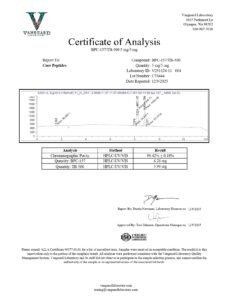
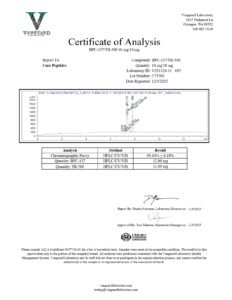
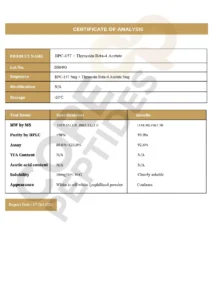
HPLC
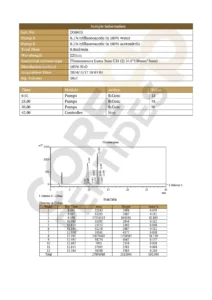
Mass Spectrometry
Be the first to review “BPC-157 & TB-500 Blend (10mg/20mg)”
Related products
Peptides Blends
Peptides Blends
Peptides Blends
Peptides Blends
Peptides Blends
Peptides Blends
Peptides Blends
Reviews
There are no reviews yet.