
ABP-7 Peptide: What Researchers Need to Know Before Buying
If you’ve been searching for ABP-7 peptide, you’re likely a researcher, lab buyer, or informed buyer who wants clear, accurate information before making a purchase. This guide breaks down exactly what ABP-7 is, what the current research says, and how to evaluate quality before you buy.
Quick Facts / Product Highlights
- Product Type: Synthetic heptapeptide (7 amino acids)
- Sequence: Acetyl-LKKTETQ
- Also Known As: TB-500 Fragment, Ac-LKKTETQ
- Molecular Formula: C₃₈H₈₁N₉O₂₀
- Molecular Weight: 889.5 g/mol
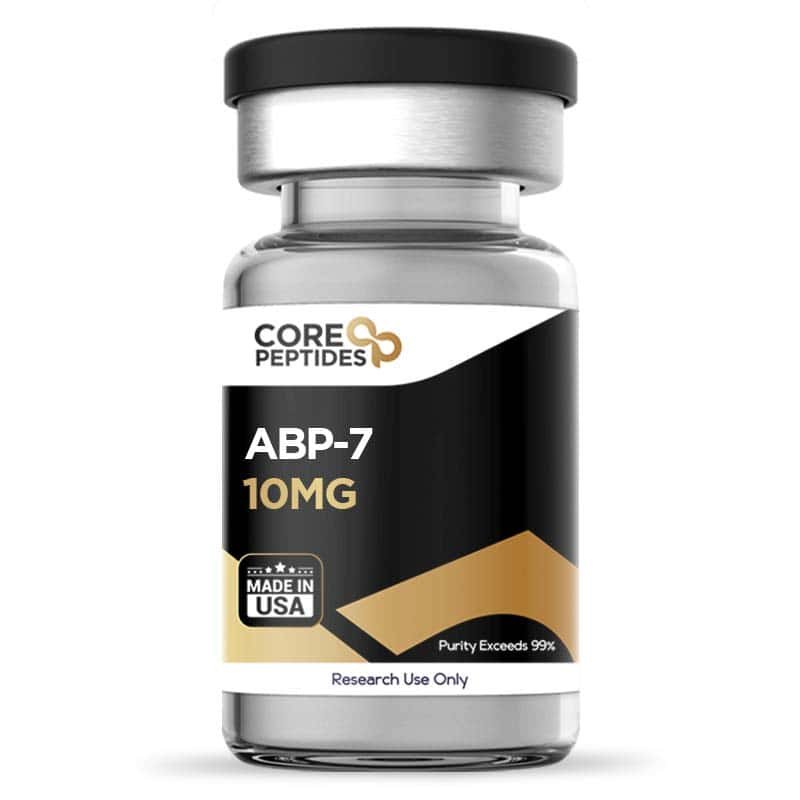
- Format: Lyophilized powder, 10mg vial
- Purity: [verify COA with CorePeptidesOfficial.com]
- Third-Party Tested: [verify batch-specific lab results]
- Storage: [verify — typically refrigerated or frozen per manufacturer guidance]
- Intended Use: Research and laboratory purposes only
- Best-Fit Buyer: Academic researchers, peptide lab buyers, life science professionals
What Is ABP-7 Peptide?
ABP-7 stands for actin binding peptide-7. It is a synthetic heptapeptide—meaning it contains seven amino acids—with the sequence Acetyl-LKKTETQ.
It is derived from a larger molecule called Thymosin Beta 4 (TB-4). Specifically, ABP-7 represents the 17–23 amino acid fragment of that parent molecule. Because of this origin, it is sometimes called the TB-500 Fragment.
ABP-7 is produced through solid-phase peptide synthesis, a standard and well-established method for producing high-purity synthetic peptides in research settings.
Researchers are interested in ABP-7 because some scientists consider its LKKTETQ sequence to be the central actin-binding domain of Thymosin Beta 4. This makes it a useful isolated tool for studying the specific role that domain plays in broader biological activity.
Key Research Areas and Use Cases
ABP-7 is studied in several distinct areas. Here is what the current published research suggests—with the important reminder that all findings are preliminary and limited to laboratory or animal models.
Actin Dynamics and the Cytoskeleton
ABP-7 is believed to inhibit the conversion of globular actin (G-actin) into filamentous actin (F-actin)—a process called actin sequestration. In research models, this may affect:
- Cell motility
- Cell shape changes
- Intracellular transport
- Signal transduction tied to cytoskeletal activity
Wound Healing Research
A study using aged diabetic murine models found that the LKKTETQ peptide promoted wound repair in ways described as comparable to the parent molecule, Thymosin Beta 4. Researchers observed potential effects on:
- Keratinocyte migration
- Collagen deposition at wound sites
- Wound closure rates
Proposed mechanisms include interaction with purinergic receptors, increased intracellular calcium signaling, and potential MAP kinase pathway activation.
Fibrosis and Hepatic Stellate Cells
Preliminary research has investigated ABP-7’s possible anti-fibrotic behavior in liver tissue. Findings suggest it may inhibit PDGF-BB-driven activation of hepatic stellate cells, potentially affecting:
- PDGFβ receptor expression
- α-smooth muscle actin (α-SMA) levels
- Collagen type I deposition
- Akt and PRAS40 phosphorylation pathways
Angiogenesis Research
In vitro and ex vivo studies suggest ABP-7 may support endothelial cell migration and tube formation — early steps in the formation of new blood vessels. Aortic ring sprouting assays have been used to explore these early-stage effects.
Important: None of these findings constitute clinical evidence. ABP-7 is not approved for human use. All research is preclinical.
Quality, Purity, and Testing Standards
When purchasing any research peptide, quality is not optional. Here is what to look for with ABP-7 specifically:
- Purity percentage: Look for ≥98% purity confirmed by HPLC analysis [verify with CorePeptidesOfficial.com COA]
- Mass confirmation: HRMS or LC-MS testing confirms the peptide matches the correct molecular weight of 889.5 g/mol
- Third-party testing: Independent lab verification adds an additional layer of credibility
- Batch traceability: Each vial should be traceable to a specific production batch
- Certificate of Analysis (COA): Should be available on request or via the product page
How to Evaluate ABP-7 peptide Before Buying
Before placing an order, run through this checklist:
- Request or download the COA — Does it show purity, batch number, and test date?
- Confirm the testing method — HPLC and mass spectrometry are the gold standard
- Check the sequence listed — It should state Acetyl-LKKTETQ explicitly
- Verify the molecular weight — 889.5 g/mol confirms correct identity
- Look for intended-use language — Legitimate suppliers clearly label products for research use only
- Check return and quality policies — Reputable suppliers stand behind their product quality
If any of these elements are missing or vague, treat that as a red flag.
Storage, Handling, and Usage Considerations of abp-7 peptide
Proper storage protects peptide integrity and ensures your research data is reliable.
- Lyophilized (freeze-dried) peptides are generally more stable than reconstituted solutions
- Store per manufacturer instructions — typically at -20°C or lower for long-term stability [verify with CorePeptidesOfficial.com]
- Avoid repeated freeze-thaw cycles after reconstitution
- Handle under sterile conditions when working in a lab environment
- Use appropriate solvents for reconstitution as directed [verify recommended diluent]
- Follow all institutional biosafety protocols for peptide handling
Expert Insight / Pro Tip
ABP-7 is a fragment peptide, not the full TB-4 molecule. This matters for research design. If your study requires full Thymosin Beta 4 activity, ABP-7 alone may not replicate all biological effects — it isolates one functional domain. However, if your goal is to study the actin-binding domain specifically, ABP-7 offers a cleaner, more targeted research tool than the full molecule.
When comparing lot-to-lot consistency, always cross-reference COA data across batches. Sequence-verified peptides from reputable suppliers reduce experimental variability.
Why Choose CorePeptidesOfficial.com
CorePeptidesOfficial.com supplies research-grade peptides with a focus on transparency and quality documentation. When purchasing ABP-7 from this site, buyers can expect:
- Clearly labeled research-use-only products
- Access to Certificate of Analysis documentation [verify availability on product page]
- Responsive customer support for lab and ordering questions
- Consistent product descriptions with accurate chemical identifiers
- Secure ordering and professional packaging standards [verify shipping details]
Common Mistakes to Avoid
- Skipping the COA — Never assume purity. Always verify with documentation.
- Confusing ABP-7 with full TB-500 — They are related but not identical products.
- Improper storage — Storing at room temperature can degrade peptide quality rapidly.
- Using research peptides outside a lab context — ABP-7 is for research purposes only.
- Buying based on price alone — Unusually low prices often signal lower purity or poor synthesis quality.
Final Buying Guidance
ABP-7 peptide is a well-characterized synthetic fragment with a growing body of preclinical research behind it. It is best suited for researchers studying actin dynamics, wound biology, fibrosis mechanisms, or angiogenic signaling.
If you are a qualified researcher or lab buyer looking for a verified, properly documented peptide, CorePeptidesOfficial.com offers a straightforward path to procurement.
Before checkout:
- Download or request the COA
- Confirm the batch number and purity
- Verify storage and shipping handling standards
- Confirm the product is appropriate for your research application
Ready to proceed? Visit the ABP-7 10mg product page to review current documentation and place your order.
FAQ
1. What is ABP-7 peptide used for? ABP-7 is used in research settings to study actin-binding activity, wound repair mechanisms, fibrosis signaling, and angiogenesis. It is not approved for human therapeutic use.
2. Is ABP-7 the same as TB-500? No. ABP-7 is a seven-amino acid fragment derived from Thymosin Beta 4, the parent molecule behind TB-500. It isolates the actin-binding domain (LKKTETQ) rather than representing the full peptide sequence.
3. How do I verify the purity of ABP-7 before buying? Request the Certificate of Analysis from the supplier. It should include HPLC purity data, mass spectrometry confirmation, batch number, and test date.
4. How should ABP-7 be stored? Lyophilized ABP-7 should be stored at low temperatures — typically -20°C or below — away from light and moisture. Always follow the specific storage instructions provided by the supplier [verify with CorePeptidesOfficial.com].
5. Who is ABP-7 peptide appropriate for? ABP-7 is intended for academic researchers, pharmaceutical scientists, and qualified lab professionals conducting preclinical research. It is not intended for personal use, self-administration, or clinical application.
Be the first to review “ABP-7 (10mg )”
Related products
Reviews
There are no reviews yet.