
CJC-1295 with Ipamorelin: A Research Buyer’s Complete Guide
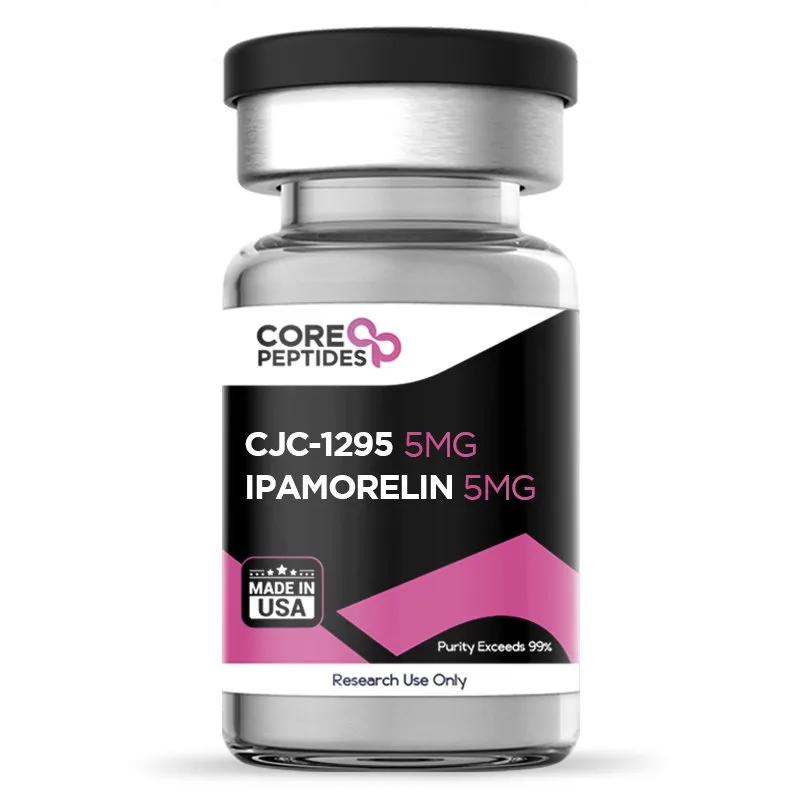
If you’re researching CJC-1295 with Ipamorelin, you’ve landed on one of the most studied peptide combinations in the research space. This guide covers exactly what this blend is, what to look for in terms of quality and purity, and how to make a confident, informed purchase from a verified source.
Product Highlights
- Product: CJC-1295 / Ipamorelin Blend — 10mg
- Format: Lyophilized (freeze-dried) powder, sealed research vial
- Purity: ≥98% [verify current COA at CorePeptidesOfficial.com]
- Testing: Third-party lab verified | Certificate of Analysis (COA) available
- Intended Use: For in vitro research and laboratory use only — not for human consumption
- Storage: Lyophilized: −20°C long-term; refrigerate (2–8°C) short-term; protect from light
- Best For: Researchers, lab purchasers, and biotech professionals studying GH secretagogue pathways
- Batch Verification: Batch number included on label [verify]
What Is CJC-1295 with Ipamorelin?
CJC-1295 is a synthetic analog of growth hormone-releasing hormone (GHRH). It is designed to stimulate the pituitary gland’s release of growth hormone (GH) in research models. The version most commonly used in research is CJC-1295 without DAC (Drug Affinity Complex), which has a shorter half-life and is often preferred for more controlled research protocols.
Ipamorelin is a selective growth hormone secretagogue and ghrelin mimetic. It belongs to the GHRP (growth hormone-releasing peptide) family and is noted in research literature for a relatively clean GH-release profile with limited impact on cortisol or prolactin at standard research doses.
Why blend them? These two peptides operate through distinct but complementary receptor pathways — GHRH receptors (CJC-1295) and ghrelin receptors (Ipamorelin). Combining them in a single formulation is a common approach in research settings studying synergistic GH axis stimulation. The 10mg blend offered by CorePeptidesOfficial.com contains both peptides in a single lyophilized vial [verify exact ratio/split on product label or COA].
Key Research Areas and Use Cases
This combination has attracted research interest across several areas:
- GH axis modulation studies — examining how dual-pathway stimulation compares to single-agent protocols
- Age-related endocrine research — studying natural GH decline patterns in aging models
- Body composition research — investigating lean mass and fat metabolism markers in animal and cellular models
- Sleep and recovery studies — some research has explored GH pulse timing and sleep architecture
- Metabolic research — investigating insulin sensitivity and lipid markers under GH-stimulated conditions
Important: None of the above represents a clinical claim. This product is intended for laboratory and research use only. It is not approved for human consumption or therapeutic application.
Quality, Purity, and Testing Standards
When buying any research peptide, purity is not optional — it’s the foundation of valid research. Here’s what CorePeptidesOfficial.com provides [verify each item directly with the supplier]:
- Purity Standard Research-grade peptides should meet ≥98% purity as confirmed by HPLC (High-Performance Liquid Chromatography) analysis. Lower-grade suppliers often only state purity without providing the actual data to back it up.
- Third-Party Testing Independent, third-party lab verification removes the conflict of interest that comes with in-house testing. CorePeptidesOfficial.com [verify] works with third-party labs to confirm purity, identity, and absence of contaminants.
- Certificate of Analysis (COA) A COA is the single most important document when buying research peptides. It should include:
- Peptide name and molecular formula
- Lot/batch number
- HPLC purity percentage
- Mass spectrometry (MS) confirmation of molecular weight
- Date of analysis
- Testing lab identity
If a supplier cannot provide a COA that matches the product you’re receiving, do not buy.
Endotoxin and Sterility Testing Research-grade peptides intended for reconstitution should ideally include endotoxin (LAL) testing. [Verify whether CorePeptidesOfficial.com includes endotoxin data for this product.]
How to Evaluate This Product Before Buying
Use this checklist before completing any research peptide purchase:
- Request the COA. Does the batch number on the COA match the vial you receive?
- Check HPLC purity. Is purity stated as ≥98% with supporting chromatography data?
- Confirm the blend ratio. What is the CJC-1295 to Ipamorelin ratio in the 10mg vial? [verify]
- Look for MS confirmation. Mass spectrometry confirms the peptide sequence matches what’s labeled.
- Check the lab. Is the third-party testing facility named on the COA? Can you verify it exists?
- Read the label language. Does the product clearly state “for research use only”? This reflects a compliant, responsible supplier.
- Look for storage instructions. Legitimate suppliers include storage guidance. Lyophilized powder must be kept dry and cold.
- Review packaging. Is the vial sealed with a crimp cap? Is the label professionally printed with a batch number?
Storage, Handling, and Usage Considerations
Lyophilized (Dry) Storage:
- Long-term: −20°C (standard freezer)
- Short-term (up to 4 weeks): 2–8°C (standard refrigerator)
- Keep away from light, moisture, and heat
- Do not store in a frost-free freezer (temperature cycling degrades peptides)
After Reconstitution:
- Reconstitute only when ready to use in your research protocol
- Use bacteriostatic water or sterile water [verify supplier recommendation]
- Reconstituted solution: store at 2–8°C; use within 28 days [verify]
- Do not freeze reconstituted peptide
Handling in the Lab:
- Use sterile technique throughout reconstitution
- Use a 0.22 µm filter if your protocol requires sterile filtration
- Record batch number, reconstitution date, and concentration in your lab notebook
Expert Insight
- Why the “without DAC” version matters in research: CJC-1295 without DAC (also called Mod GRF 1-29) has a shorter active half-life (~30 minutes) compared to the DAC version (~6–8 days). For researchers who need precise, pulsatile GH stimulation in their protocols, the without-DAC version offers finer control. If you’re comparing products, confirm which version is in the formulation. CorePeptidesOfficial.com [verify] lists the specific variant on the product page.
- Why blend concentration matters: A 10mg blend sounds straightforward, but the split between CJC-1295 and Ipamorelin affects research design. Common research preparations use a 1:1 ratio by weight (e.g., 5mg CJC-1295 + 5mg Ipamorelin). Confirm the actual breakdown listed on the COA before designing your protocol.
Why Choose CorePeptidesOfficial.com
CorePeptidesOfficial.com operates in the research peptide space with a focus on verified quality and transparent sourcing. Key reasons researchers choose this supplier [verify each with the brand]:
- COA-backed products — every product supported by third-party lab documentation
- Batch traceability — lot numbers on each vial match COA records
- Compliant labeling — products labeled for research use only, not for human consumption
- Reliable cold-chain shipping — peptides shipped with appropriate temperature considerations [verify packaging details]
- Responsive support — [verify customer service availability and response standards]
- Product range depth — CJC-1295/Ipamorelin available in a single pre-blended 10mg vial for research convenience
When a supplier makes their COA publicly accessible, links batch numbers to lab reports, and clearly labels products for their intended research use, that’s a meaningful signal of operational integrity.
Common Mistakes to Avoid
- Buying on price alone. Research peptide pricing varies widely. Significantly underpriced products often reflect lower-grade raw materials, underdosed vials, or absent testing. A small investment in a COA-verified product protects your research data.
- Skipping COA verification. A COA printed on the supplier’s own letterhead, without a named third-party lab, is not independent verification. Always look for the testing lab name and confirm it.
- Ignoring the CJC-1295 variant. CJC-1295 with DAC and CJC-1295 without DAC (Mod GRF 1-29) are different compounds with different half-lives. If the product page doesn’t specify, ask before ordering.
- Storing improperly. Peptide degradation from heat or moisture is invisible — you won’t see or smell it. Stick to cold, dry, dark storage from the moment the package arrives.
- Reconstituting too early. Lyophilized peptides are stable much longer than reconstituted solutions. Don’t reconstitute until you need to.
Final Buying Guidance
The CJC-1295 with Ipamorelin 10mg blend from CorePeptidesOfficial.com is suited for researchers and lab buyers who need a pre-formulated, purity-verified combination for GH-axis research protocols. Before completing your purchase:
- Confirm the COA is accessible and matches the current batch
- Verify the CJC-1295 variant (with or without DAC)
- Check the peptide ratio within the 10mg blend
- Review storage and shipping guidelines for your region
This is a research-use product. It is not approved for human use or therapeutic purposes.
[Browse the CJC-1295 / Ipamorelin Blend at CorePeptidesOfficial.com →]
Frequently Asked Questions
- What is the difference between CJC-1295 with DAC and without DAC? CJC-1295 with DAC (Drug Affinity Complex) has a significantly longer half-life — up to 6–8 days — due to its albumin-binding properties. CJC-1295 without DAC (Mod GRF 1-29) has a much shorter half-life of roughly 30 minutes, making it more suitable for research protocols that require pulsatile GH release modeling. The CorePeptidesOfficial.com blend [verify] uses the without-DAC version, but confirm this on the product page before ordering.
- What does the 10mg refer to — is that the total peptide content or per peptide? In a 10mg blend, the number refers to the total peptide content across both compounds. The actual split between CJC-1295 and Ipamorelin depends on the formulation ratio used by the manufacturer. A common ratio in research preparations is 1:1 by weight (5mg + 5mg). Verify the exact breakdown on the COA or product specification sheet before use in any research protocol.
- How can I verify the purity of this product? Request the Certificate of Analysis (COA) for the specific batch you receive. The COA should include HPLC chromatography data showing purity ≥98%, mass spectrometry data confirming molecular identity, the testing lab’s name, and the date of analysis. The batch number on your vial should match the batch number listed on the COA. CorePeptidesOfficial.com [verify] makes COA documentation available upon request or directly on the product page.
- How should I store the CJC-1295 / Ipamorelin blend after it arrives? Lyophilized (freeze-dried) peptide should be stored at −20°C for long-term stability or at 2–8°C for short-term use. Keep vials away from light and moisture. Do not store in a frost-free freezer. Once reconstituted, store the solution at 2–8°C and use within 28 days [verify with supplier]. Record reconstitution date and concentration in your lab records.
- Is CJC-1295 with Ipamorelin approved for human use? No. CJC-1295 and Ipamorelin are research peptides. They are not approved by the FDA or equivalent regulatory bodies for human therapeutic use. This product is intended strictly for laboratory research purposes. It is not for human consumption, clinical use, or veterinary administration. Always use research peptides in compliance with the laws and regulations in your jurisdiction.
This article is intended for informational and research-planning purposes only. CorePeptidesOfficial.com products are sold for in vitro research and laboratory use only. They are not intended for human consumption, therapeutic use, or veterinary application. Always comply with applicable laws and institutional guidelines when purchasing and using research peptides.
Be the first to review “CJC-1295 & Ipamorelin Blend (10mg)”
Related products
Peptides Blends
Peptides Blends
Peptides Blends
Tesamorelin & CJC-1295 (Mod GRF 1-29) & Ipamorelin Blend (12mg)
Peptides Blends
Peptides Blends
Peptides Blends
Peptides Blends
Reviews
There are no reviews yet.